
Waterfront
Trees, shrubs, and groundcover vegetation along the shoreline is a lake or stream’s last line of defense against pollution coming off of the surrounding landscape. Following are best practices for those who own waterfront property. In addition, properties within 250’ of a lake or pond over 10 acres or some streams must comply with the requirements of the statewide Shoreland Water Quality Protection Act.
Vegetate Your Shoreline
Vegetation along the shoreline is a lake or stream’s last line of defense against pollution coming off of the surrounding landscape and into the lake or stream. Planting or maintaining native trees, shrubs and groundcovers within 50 feet of the shore helps reduce the amount of pollution that reaches the water. Vegetation prevents erosion, slows down stormwater, provides wildlife habitat, and discourages geese.
Leave leaves and pine needles that fall in vegetated areas. These help reduce erosion and provide habitat for overwintering wildlife like frogs and fireflies.
Maintain a wider vegetated buffer (at least 75 feet) if your shoreline has a steep slope. The roots of trees and shrubs help stabilize the soil and prevent erosion down the slope into the water.
Install a rain garden if you have an area that gets large pulses of rainwater or stormwater, such as off of your roof, next to a driveway, or to interrupt a sloped area.
Limit new development in the shoreland buffer, including new paths, patios, or structures.
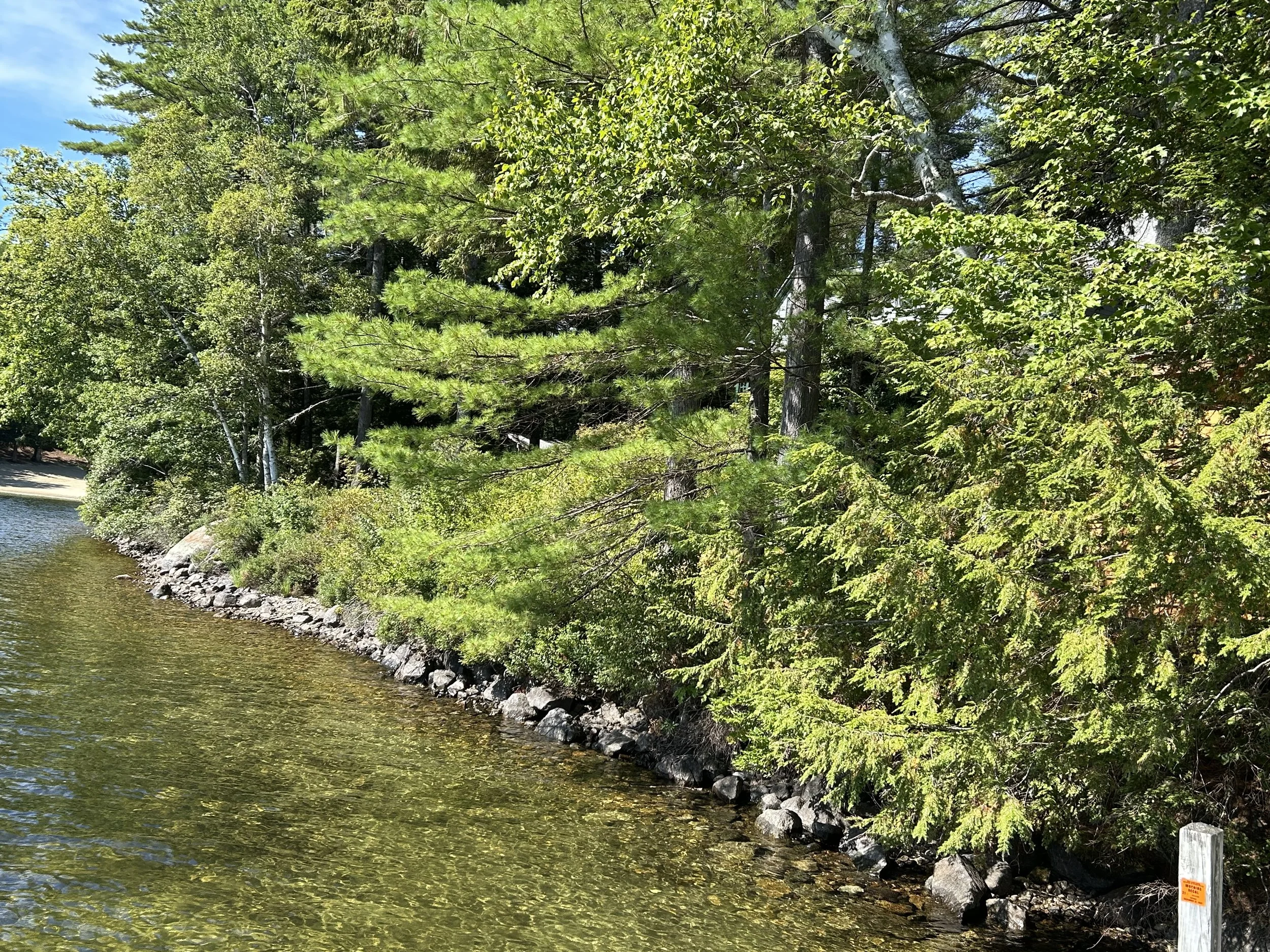
Resources to Help - Vegetated Buffers:
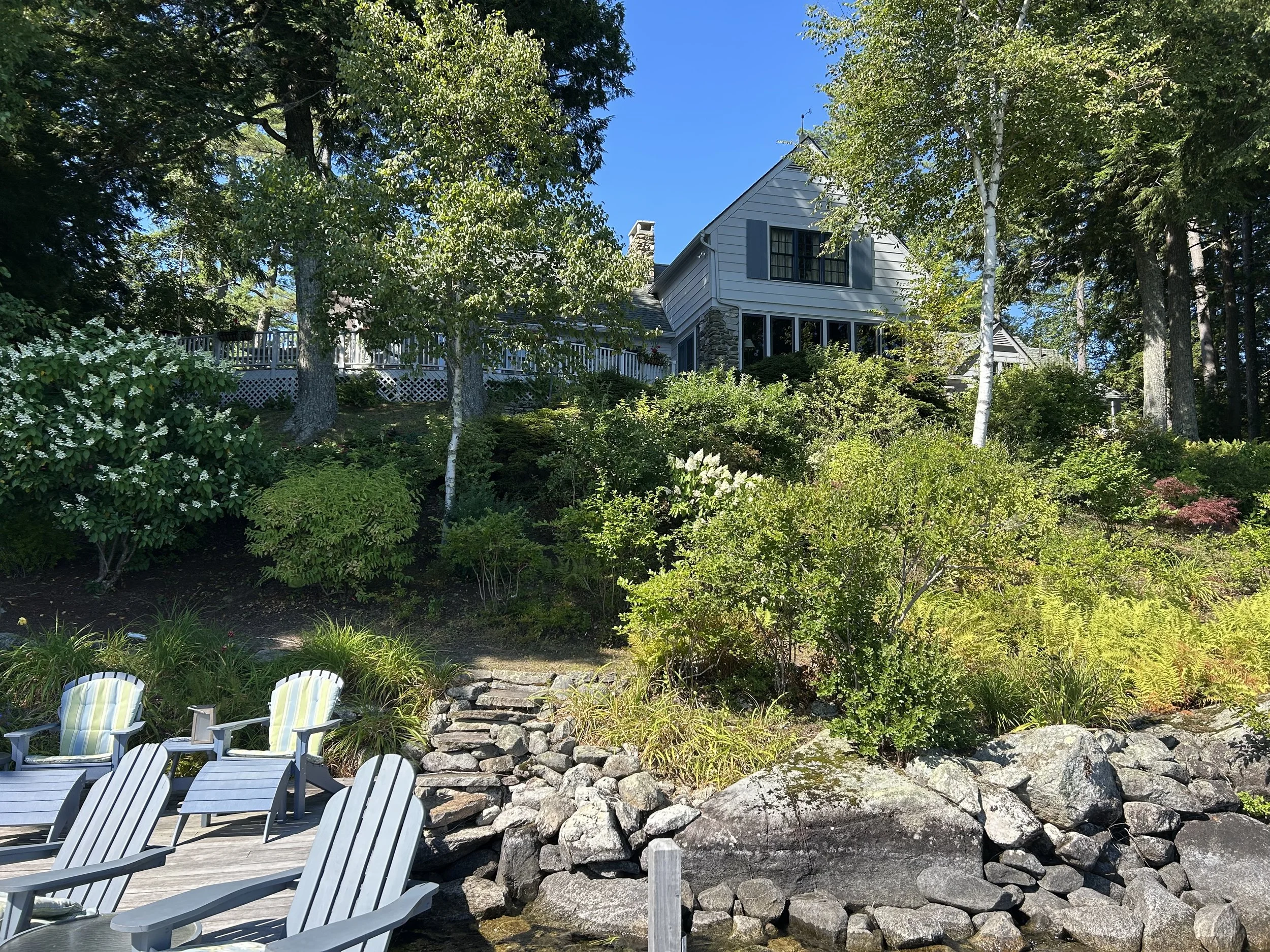
Soak Up the Rain Do-It-Yourself Guide: Vegetated Buffer
NHDES Shoreland Plant List, including species’ soil and light preferences
UNH plant list, including brief notes about each species
Wild Sods of Maine: providing instant ground cover with sod made of native plants
Live staking: certain plants, like willows, can grow from planting a branch cut off of a parent plant and correctly inserting it into the ground. This is a cost-effective option, but must be paired with mulching during the first year while the new plants become established.
Seek professional advice if working with a very steep or highly eroded shoreline. Contact LSPA Watershed Director Geoff Lizotte.
Resources to Help - Rain Gardens
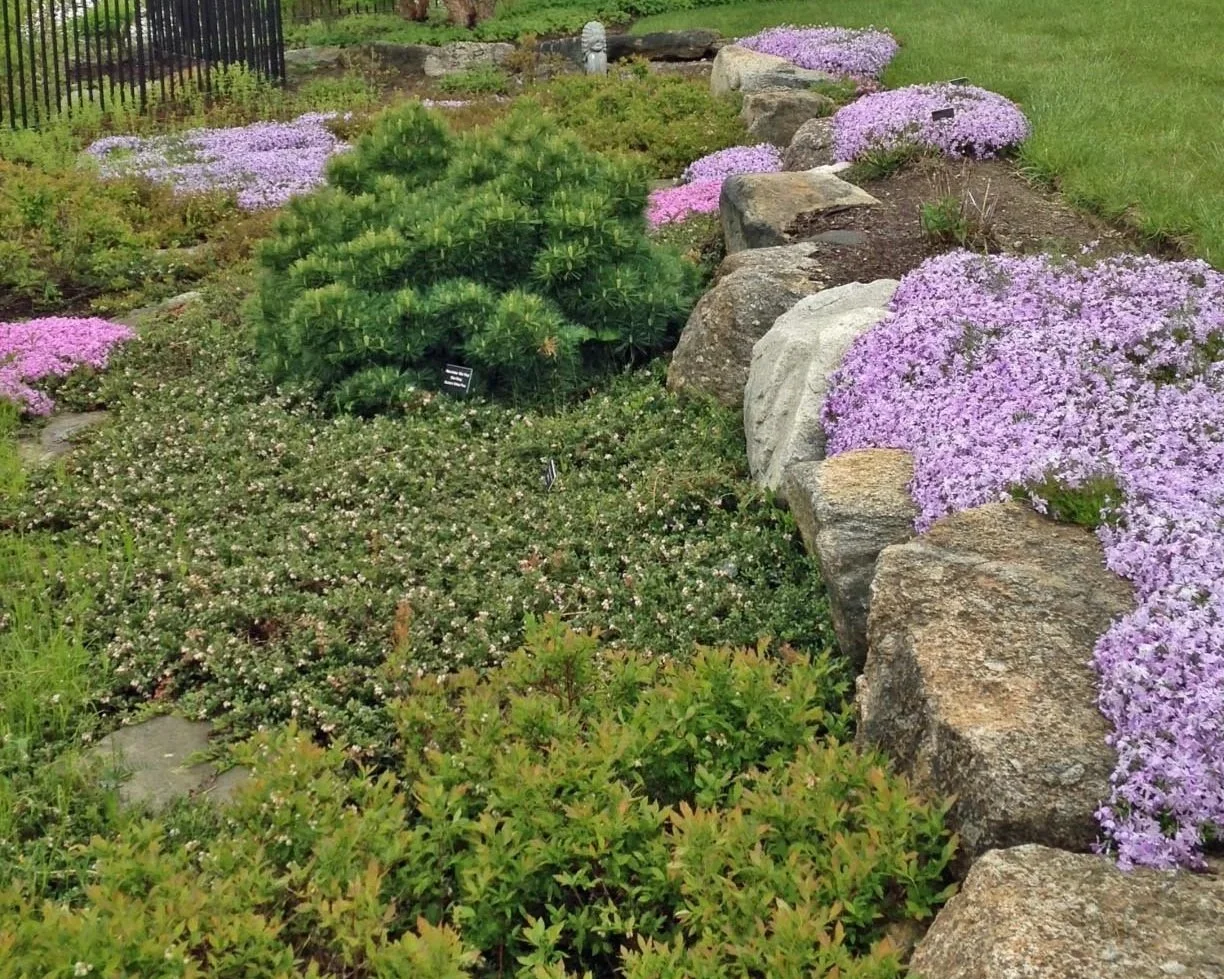
Soak Up the Rain Do-It-Yourself Guide: Rain Garden: a step-by-step how-to guide for how to locate, design, and install a rain garden
How to Install a Rain Garden video: shows many of the steps described in the Do-It-Yourself Guide.
UNH Plants for Rain Gardens: a list of plants suitable for rain gardens in different types of environments (sun vs. shade, sand vs. clay, etc.).
Some types of vegetation work within 250 feet of a lake or pond are allowed without a permit; see DES’ list of exempted projects. Others will need a shoreland permit. Any work in the water that involves the movement or extraction of soils and/or plants will require a wetlands permit.
Other Waterfront Best Practices:
Minimize the area of lawn you have at the water’s edge. Grass at the shoreline attracts geese, whose feces pollute the water with phosphorus and harmful bacteria.
Clean your boat away from the lake or stream, where washwater will not drain into the waterbody. If you clean your boat in the water, or when cleaning your dock structure, avoid using soap and chemical cleaners.
Avoid painting, staining, or otherwise treating the wood of your dock.
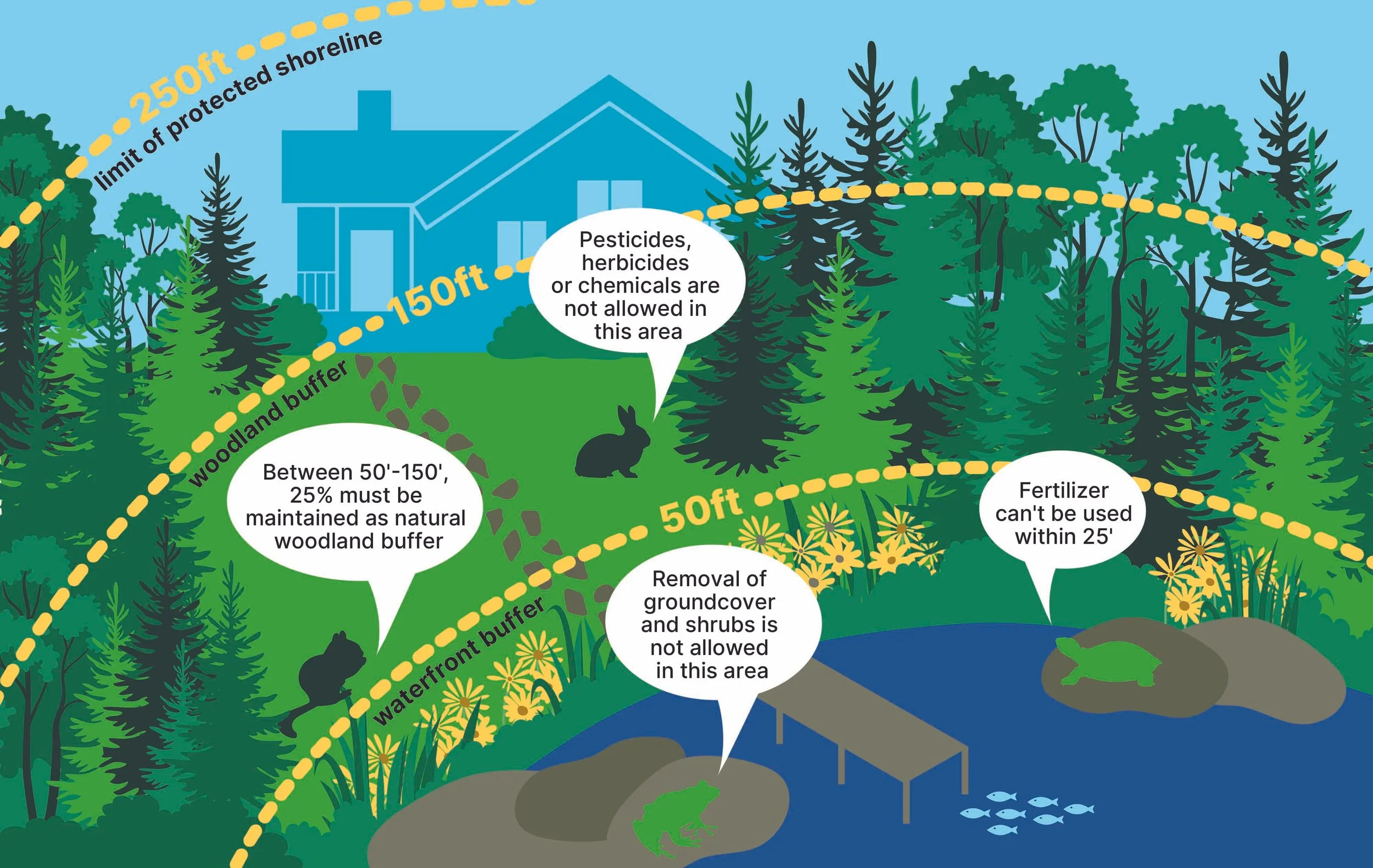
This graphic is based on the Shoreland Water Quality Protection Act.