
Lawns & Yards
Lawns, footpaths and other areas cleared of natural vegetation can contribute to water pollution through runoff and erosion. Misuse or overuse of fertilizer on your property causes runoff pollution that feeds cyanobacteria blooms.
The information below focuses on lawn care and fertilizers. Please visit the landscaping and recreational spaces page for more information and resources on paths & walkways, gardens and landscaping and best practices on steep slopes.
Lawn Care
Turf grass has shallow roots, which reduces the land’s ability to filter out stormwater pollutants before they reach the lake. To protect water quality while also enjoying your lawn, consider the following best practices.
Negotiate a lake-friendly landscaping contract: If you hire a landscaper to maintain your lawn, ask them about their practices and choose one who acts in lake-friendly ways.
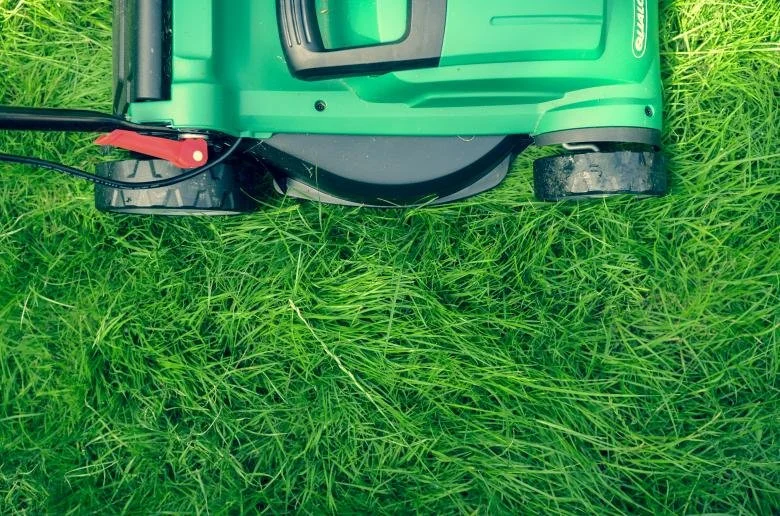
Leave grass clippings: They act as a natural fertilizer for your lawn. If you mow regularly, the clippings will be fine enough that they do not form sod.
Raise your lawn mower blades to 3”: The shorter you mow your grass, the shallower its roots, the less healthy the grass is, the more maintenance it requires, and the more prone it becomes to erosion.
Mow your leaves and leave in place: Mowing shreds the leaves and allows them to act as a natural fertilizer.
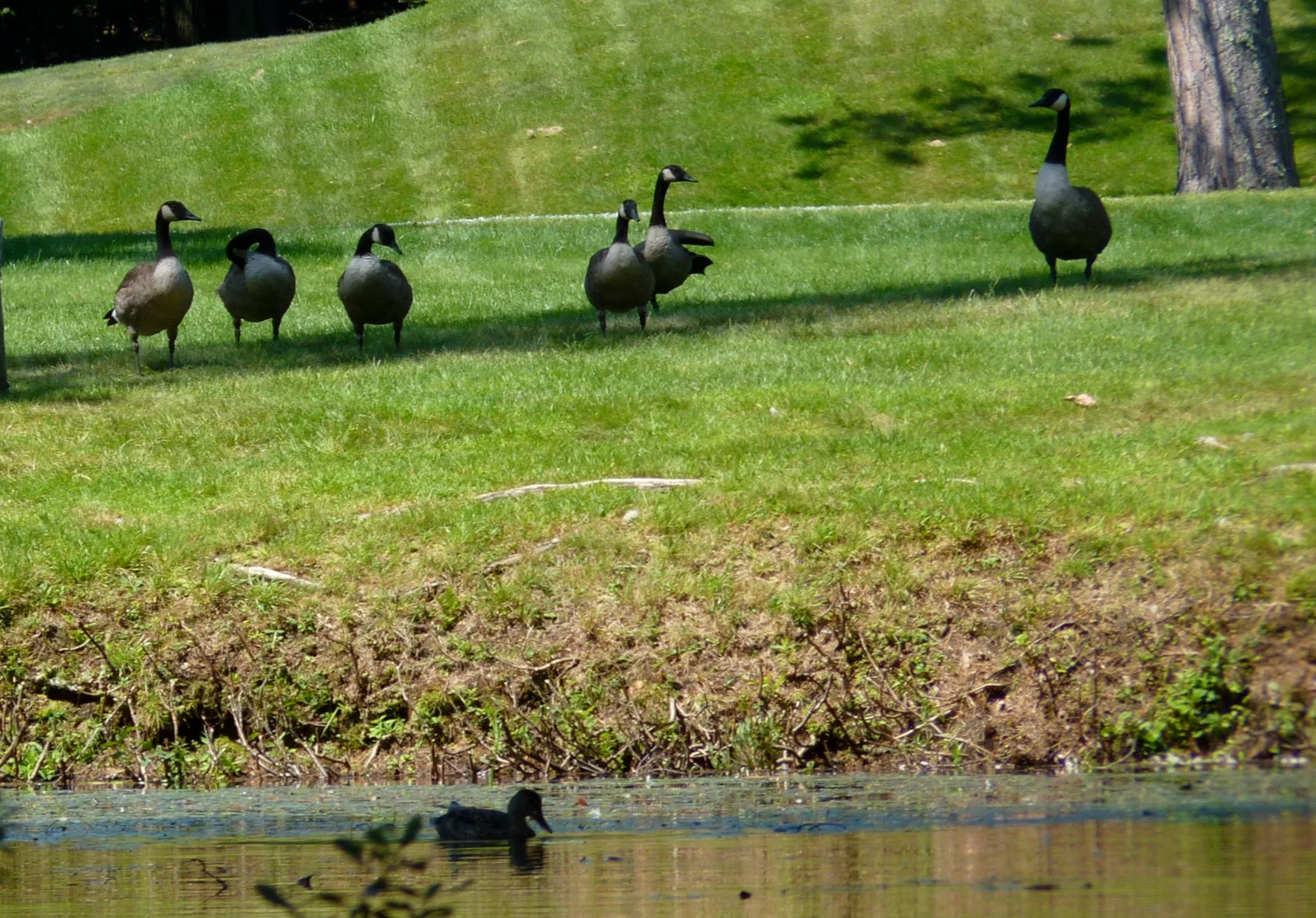
Avoid having a lawn immediately adjacent to the water: Lawns adjacent to the water attract geese, whose feces can pollute the water with bacteria. Vegetating a shoreline with shrubs, trees, and groundcovers helps stabilize the shoreline and filter out pollution.
Keep only the lawn you use: If there is an area you do not use, consider planting wildflowers, shrubs, or trees. These help keep pollutants out of the lake and provide many benefits to wildlife. See this native plants list to help select a good fit for your site.
You can also consider installing a clover lawn. Spread clover seeds onto your existing lawn area in the early spring or early fall. Dutch white clover is an easy to maintain, low-growing variety.
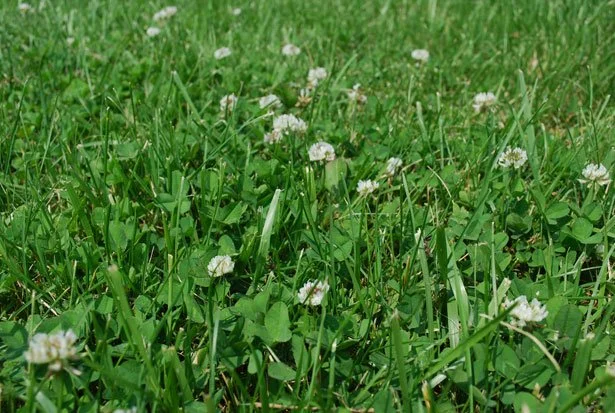
Clover does not require watering or mowing as often as grass and stays green longer into the summer.
Like grass, dutch white clover is low-growing and provides a pleasant and aesthetically appealing surface to recreate on, while improving the ground’s ability to infiltrate stormwater.
Clover also fixes nitrogen, helping keep your lawn healthy without added fertilizers.
Avoid using herbicides, pesticides, insecticides, and rodenticides on lawns and in gardens. All of these contain chemicals that can harm people, pets, and wildlife.
Additional Resources on Lake-friendly Yards and Lawns
UNH Extension’s Landscaping at the Water’s Edge
EPA’s Green Scaping
Vermont’s Lake-friendly Yard Maintenance
A Note on Fertilizers
It is best for the lake to avoid applying fertilizer, as any fertilizer that is not quickly taken up by plants ends up feeding cyanobacteria blooms and aquatic plants in nearby waterbodies. If you are going to apply fertilizer, follow these best practices to reduce the likelihood of polluting nearby waterbodies:
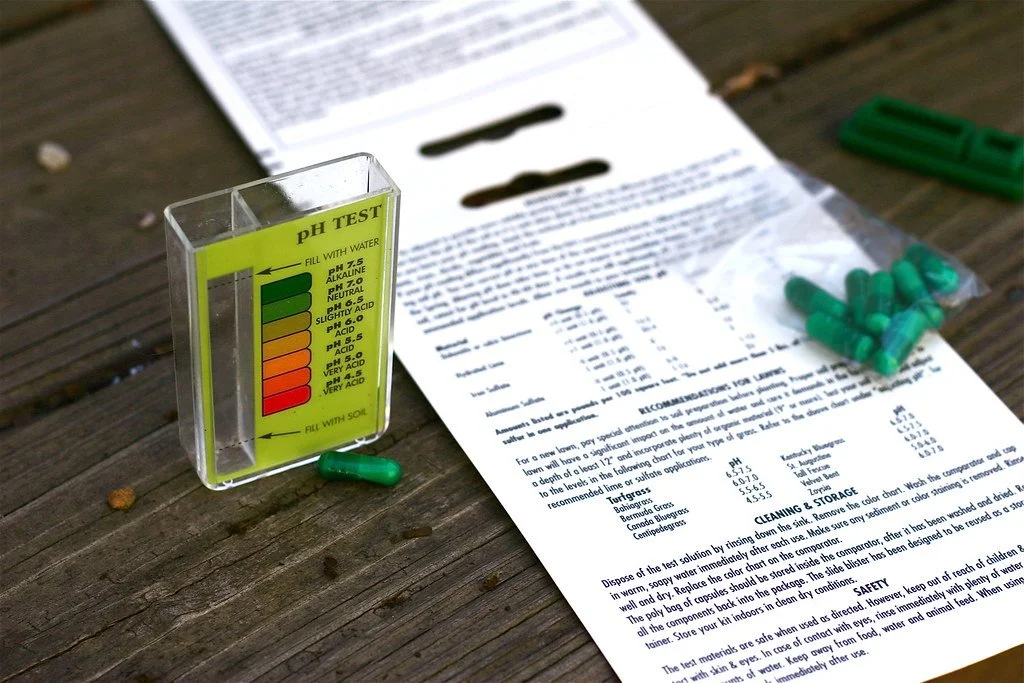
Test your soil before applying fertilizer. A soil test will tell you what nutrients are lacking in your soil and what is needed to remedy those deficiencies. UNH Extension offers low-cost soil tests that include a report with fertilizer recommendations based on the plants you are growing (e.g. lawn, garden, fruit trees, etc.).
Do not apply when rain is forecasted. If it rains before plants absorb the fertilizer, the fertilizer will move away from where it is needed, which risks polluting nearby waterbodies. Apply at least 24 - 48 hours before a predicted rainstorm.
Fertilize only where needed. Apply at the base of shrubs and trees, or in a targeted area. Take care not to spill fertilizer on paved areas or near storm drains.
Use only as much as needed. Follow the application rates included in your soil test results. Product labels often call for heavier application rates than are needed for healthy plant growth.
Apply lawn fertilizers in spring and fall. Lawn grasses grow in spring and fall, and are largely dormant during the summer heat. Plants only absorb fertilizer when they are growing.
Use slow-release fertilizer. These are designed to release fertilizer at a rate that plants can uptake the nutrients, which reduces nutrient runoff.
Use the right fertilizer for your needs. All fertilizer bags will contain three numbers separated by dashes. Use ones where the middle number is 0, meaning that there is no phosphorus in the fertilizer and follow the recommendations from your soil test.
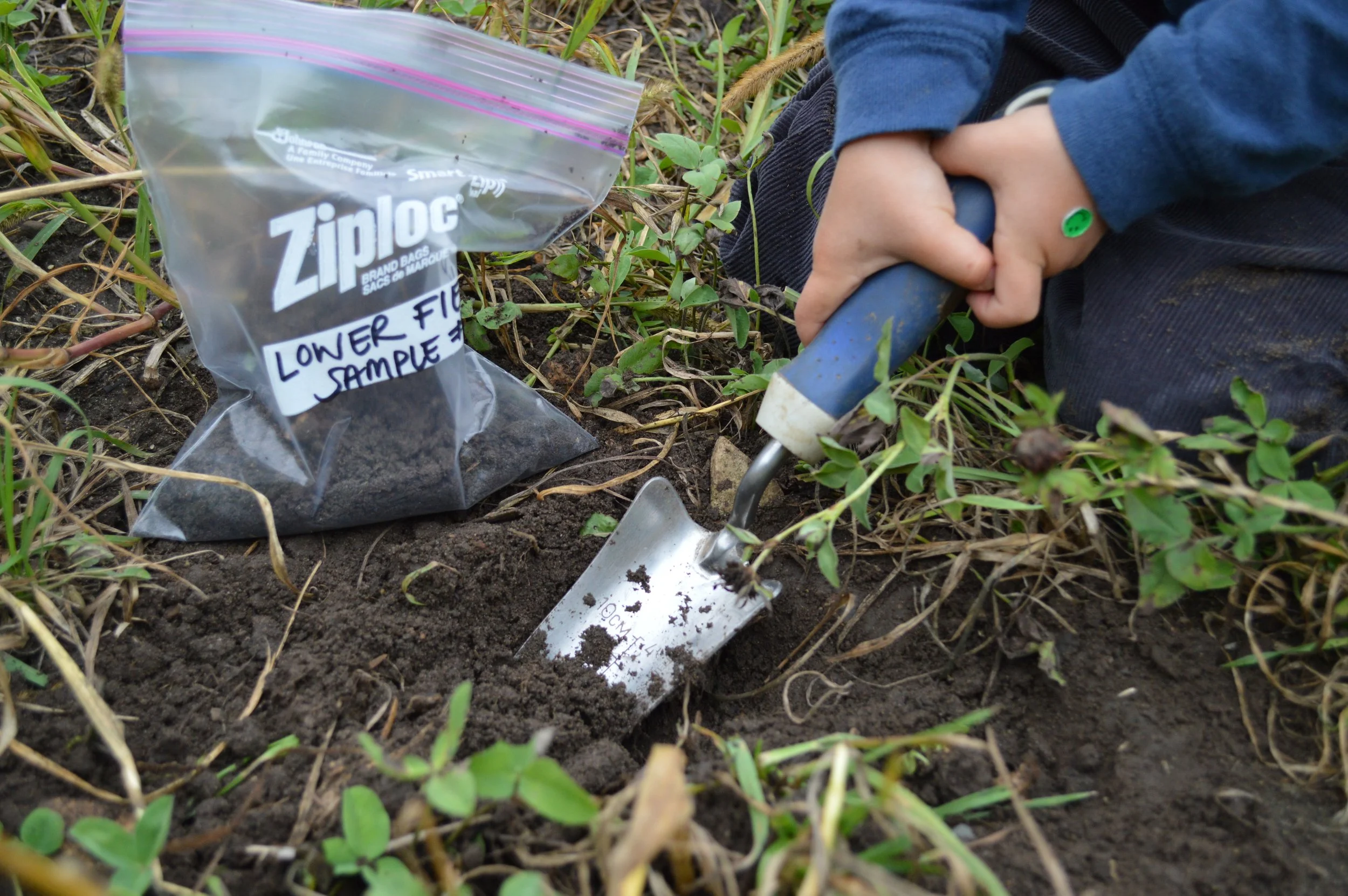
Photo: UNH Extension
Note that it is illegal to apply fertilizer within 25’ of a waterbody covered by the Shoreland Water Quality Protection Act. For additional information, see DES’s fact sheet on lawn care in the protected shoreland.
Please visit the landscaping page for more information and resources on paths & walkways, gardens and landscaping and best practices on steep slopes.