
Lake-friendly Landscaping
What you do on your property can have a big impact on water quality.
A lack of shoreline vegetation increases stormwater runoff and can lead to:
Soil erosion resulting in sedimentation which reduces water clarity.
Fertilizers being washed into lakes, ponds and streams stimulating aquatic plant growth and causing toxic algal blooms.
Pesticides being carried into waterbodies which are harmful to people, pets and aquatic life.
Pet waste being washed into waterways which contaminates water and poses a health hazard to people.
Plants, especially along the shoreline, are effective at minimizing stormwater runoff by slowing the flow, allowing water to soak in, and filtering out pollutants. Click here for a list of suggested native plants depending on your site. And for a list of local sources to purchase native plants, click here.
A vegetated shoreline buffer consists of trees, shrubs, groundcover and leaf litter along the shore of a lake or stream.
A wide vegetated buffer provides effective water quality protection for lakes and streams especially on steep slopes.
Paths to the water’s edge should be narrow and meandering.

Click here to download a copy of LSPA’s informational card on lake-friendly landscaping.
Curious about how to deal with path design, steep slopes and other best practices on your property? Visit our Watershed Wise Resources page.

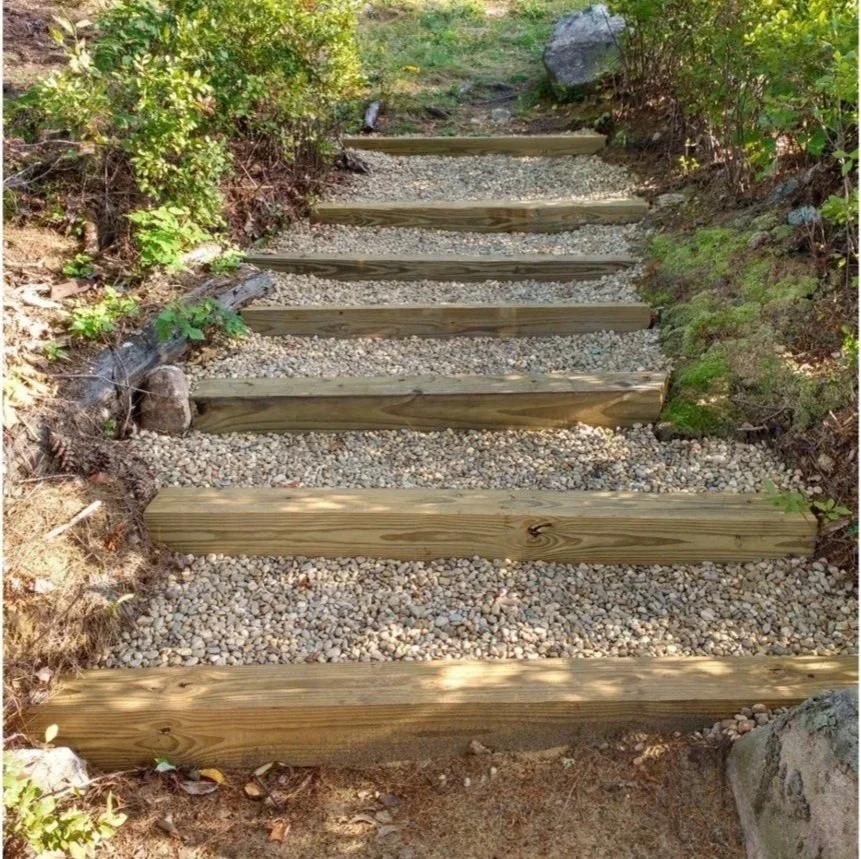
Photo: NHDES

Click on the button to the right to explore a tool created by Nicole Ward, past Calhoun Fellow, to see how your shoreline property management decisions can affect water quality.