
Lake Ecosystems
Loons
Lake Sunapee, Little Lake Sunapee, and Morgan Pond are home to nesting loons! And most of the other lakes in the watershed have visiting loons most summers.
LSPA, in coordination with the Loon Preservation Committee (LPC), floats nest rafts to provide nesting habitat for loons. These man-made islands also offer protection from predators and water level fluctuations.
If you come across loons while you’re on the water, please give them plenty of space (at least 150 feet or more).
To learn more about loon behavior, and ways you can help protect them, click the button below.

Photo by Midge Eliassen
Fish
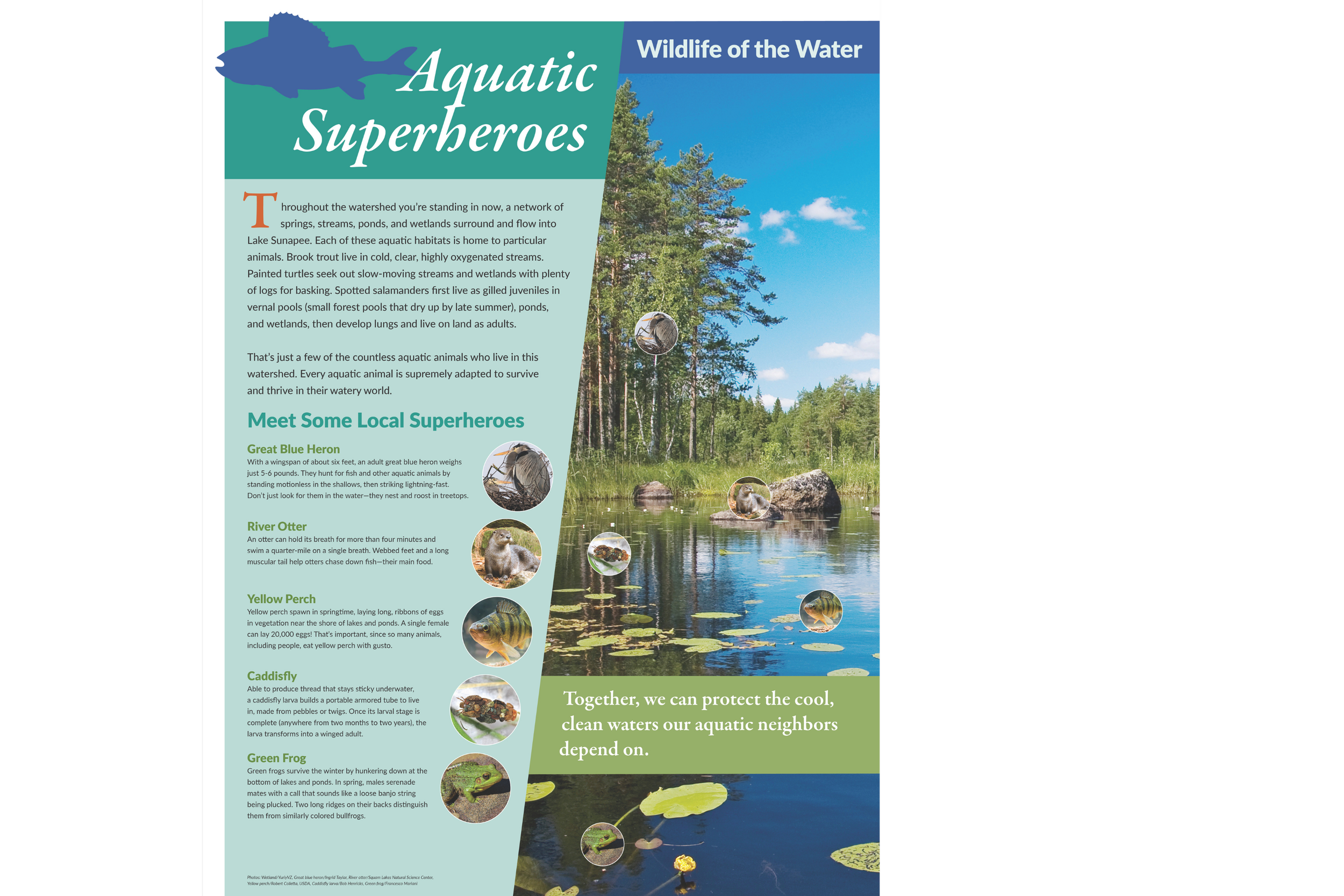
There are many species of fish in Lake Sunapee, and a long history of fishing that has affected who inhabits these waters!
Initially, Lake Sunapee had cold-water fish. Warm water species such as pickerel, yellow perch, and horned pout appeared, most likely stocked by early settlers. With fishing methods including seines, spears, nets, and clubs at the spawning streams and tributary brooks, fish populations had dwindled, and in 1819, the state of New Hampshire stepped in with regulations. For a time, violence ruled at the spawning areas, where people considered the fish their own. By 1831, all laws were repealed. And by the mid -1800s, boats were used for deep water fishing.
Eventually, Lake Sunapee became the first lake to hold landlocked salmon and small mouth black bass together, with smelt, whitefish, and more.
Click the button below for more information.
Lake Sunapee Food Web
The food web is an essential part of the lake ecosystem. Understanding the complex connections between plants and animals helps us to understand the impacts and ramifications of any changes to this delicate, balanced system.
