
Water quality Monitoring
LSPA has been collecting and recording water quality data from tributaries, lakes and ponds within the Lake Sunapee Watershed since 1986 which helps us track short and long-term changes. Sudden changes generally indicate that land activity or disturbance is degrading water quality and needs to be addressed. Long term data trends help guide LSPA in their efforts to inform and educate the public about the need to be good watershed stewards if we are to maintain or improve our high-quality waters.
Water Quality Data
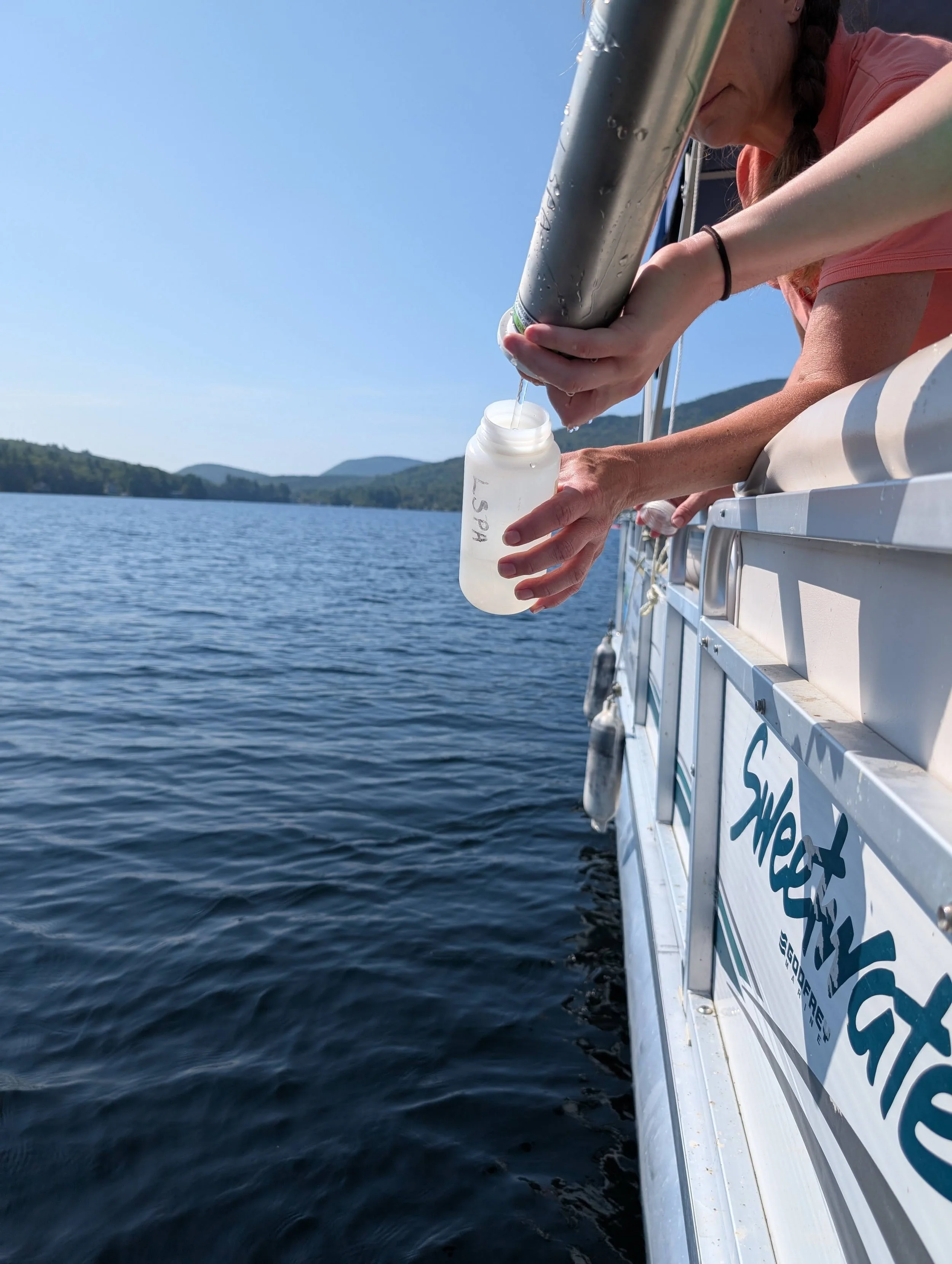
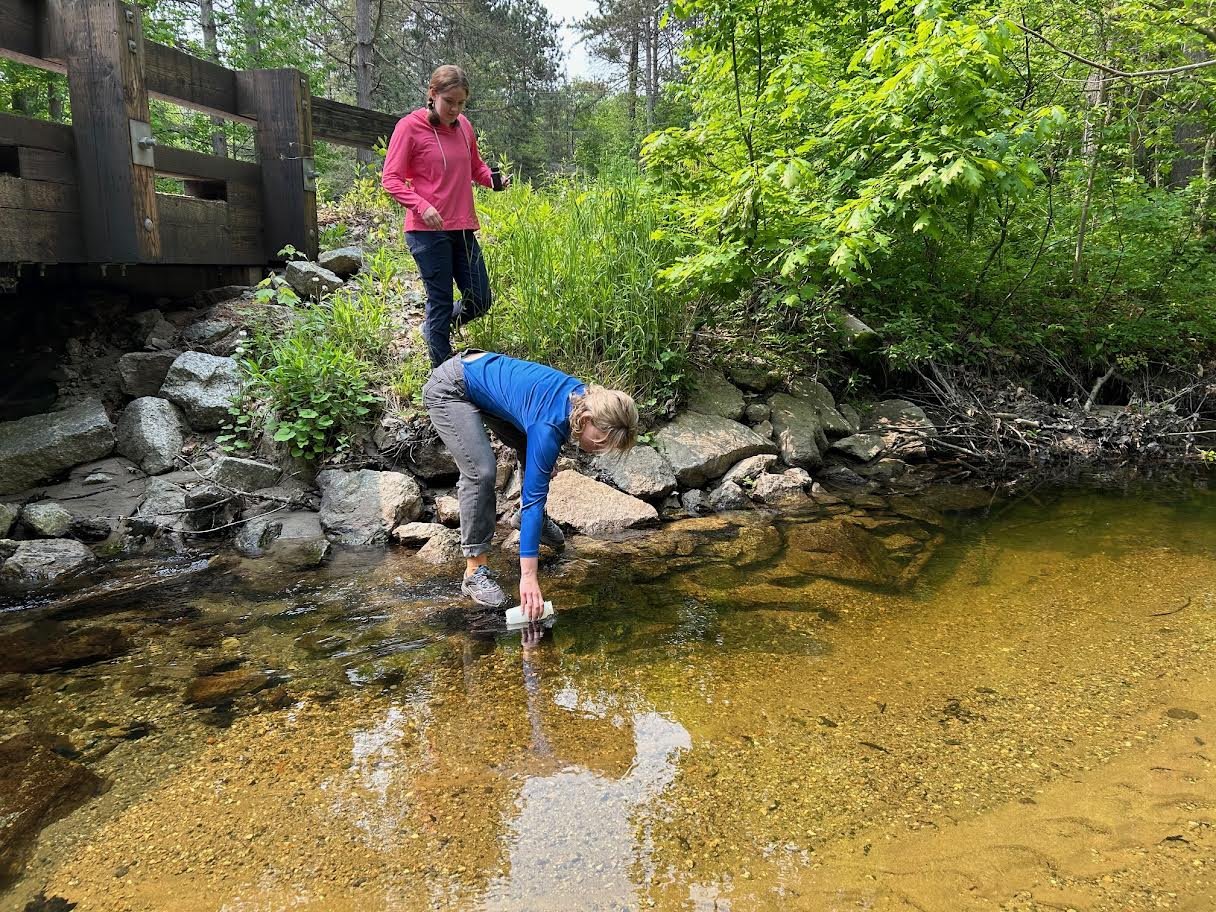
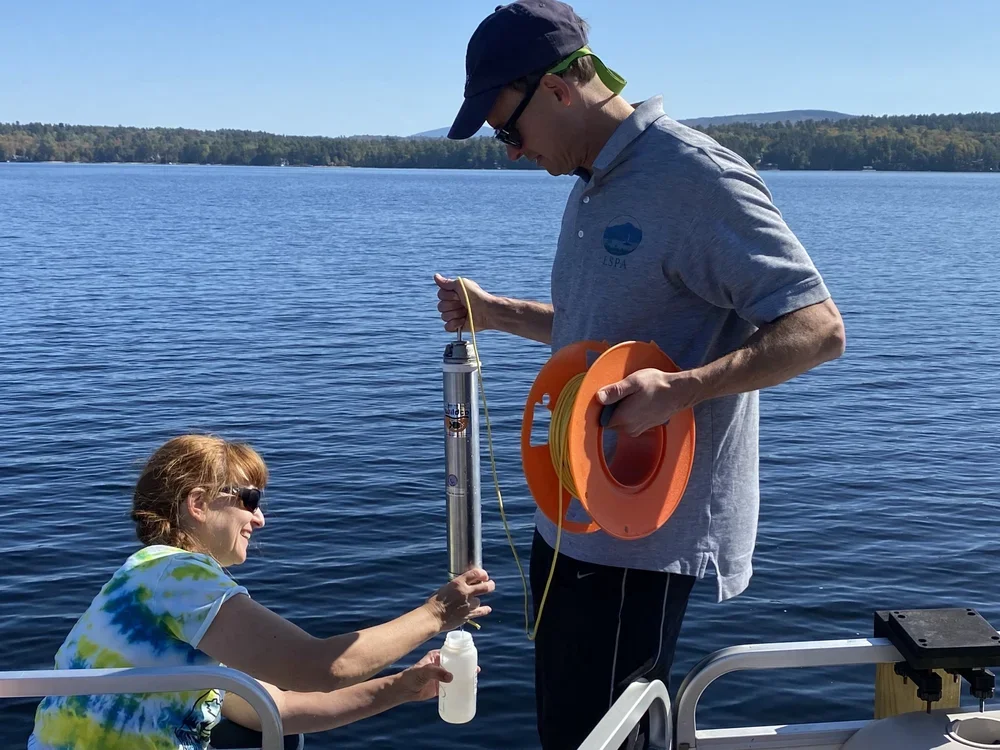
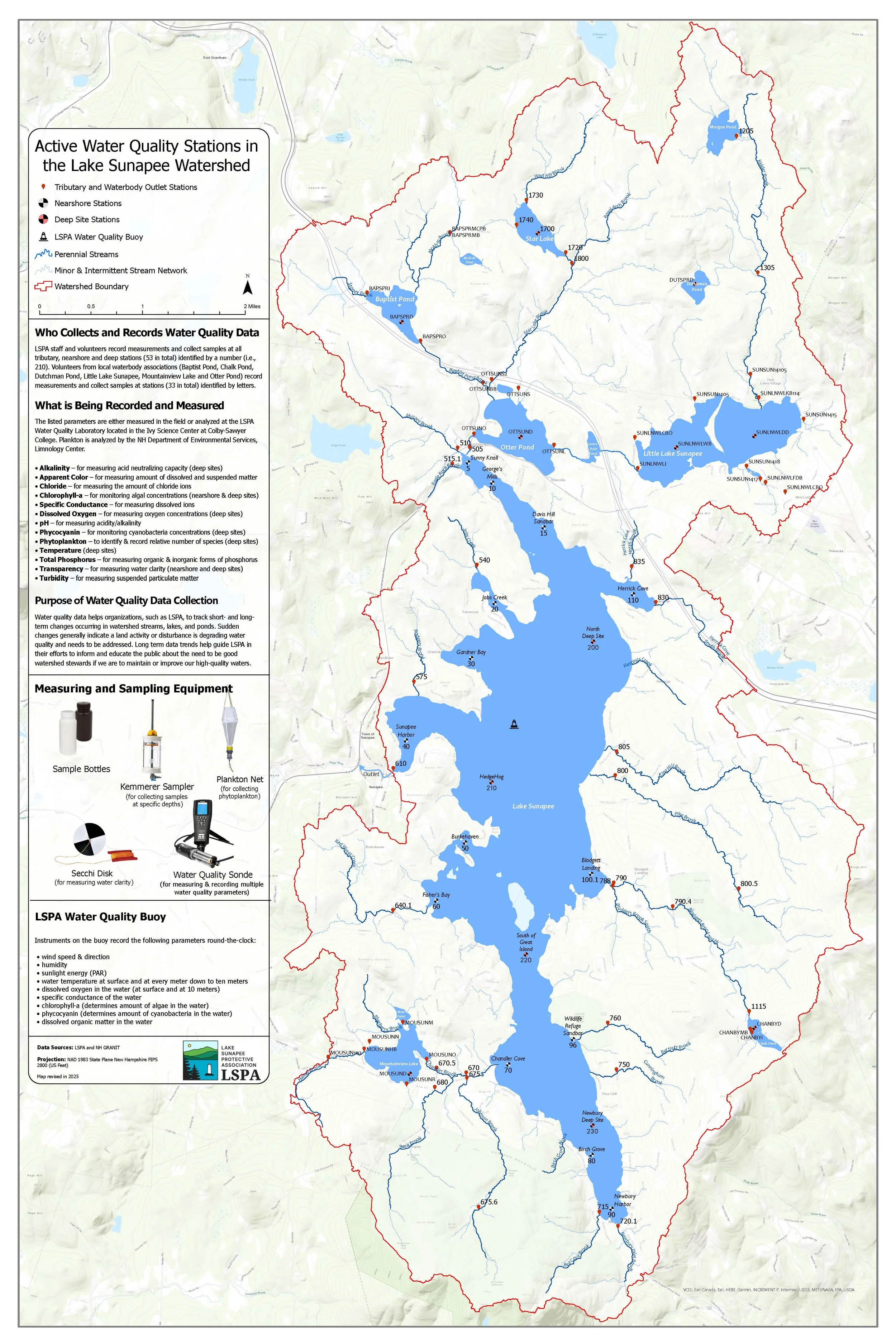
LSPA staff and volunteers record measurements and collect samples at 53 stations in Lake Sunapee, including tributary, nearshore, and deep sites. Volunteers from six waterbody associations in the watershed record measurements and collect samples at 33 stations. All of these water samples are analyzed at LSPA’s Water Quality Lab at CSC. Click the map to the right to get a better look at the water quality stations in the Lake Sunapee Watershed.
Water Quality Parameters
Alkalinity (ANC- Acid neutralizing capacity) - a measure of the ability of water to neutralize or buffer an input of acid. Lower levels can result in increasing acidity in the lake. Lake Sunapee’s alkalinity levels have risen over the years, which is good!
Apparent Color - a measure of the color of water, associated with the amount of tannins present. It consists of dissolved and suspended matter in water, such as metals in the soils (iron) or by decaying organic matter (wetlands). More intense and frequent storm events, increases in water and atmospheric temperatures, and their effects on thermal stratification all contribute to the browning of lake water. Clear is considered to be 0 to 20 PCUs.
Chloride - a measure of the amount of chloride ions in the water. Typically, the chloride in NH surface waters comes from road salts (sodium chloride). At high levels, chloride can be toxic to aquatic organisms, and excess salt can prevent mixing, thereby reducing oxygenation of bottom waters. NH has adopted the criteria of an acute chloride level of 860 mg/L and a chronic level of 230mg/L.
Chlorophyll-a - A measure of the green pigment in plants, including algae (phytoplankton), and is used as a measure of the overall algal content in the water, recorded in micrograms per liter (µg/L). A chlorophyll-a measurement of 0-5 mg/m3 is considered ‘good’, and in Lake Sunapee, the range is typically between 1 - 4 µg/L.
Depth - While measuring dissolved oxygen and temperature, we also record the depth, measured in meters (m), at the deepest point in each lake. Typically, the dissolved oxygen is lowest at the deepest site due to decomposition using oxygen.
Dissolved Oxygen (DO) - the oxygen in the water that is needed for aquatic life. Colder water can hold more dissolved oxygen than warm water. Low oxygen levels threaten fish and other aquatic animals, so most larger fish will be found in deep, cold waters in the summertime. Plant and animal decay use up oxygen, so shallow, warmer waters with an abundance of plants and other life tend to have low oxygen levels. It is measured using a probe and meter in milligrams per liter (mg/L), and the typical range for dissolved oxygen is 8 - 11 mg/L in the top few meters of Lake Sunapee (this is measured in the field).
Dissolved Oxygen % - represents how much oxygen is present compared to the maximum amount the water can hold at a specific temperature and pressure
E. coli - a coliform bacterium found in the digestive systems of warm-blooded animals. Some strains are pathogenic (disease-causing). The presence of E. coli is always possible in surface waters. Samples are cultured in the lab, and "colonies" are counted.
pH - A measure of the hydrogen ions in water, determined on a logarithmic scale of 0 - 14, with 7 being neutral. Lake Sunapee waters average about 6.7, which is slightly acidic. Tributary waters range from about 5.5 to 7.5.
Plankton - We send plankton samples to the NHDES lab in Concord, where they evaluate the relative abundance of both phyto- and zooplankton. This information can be used to assess the base of the food web in the lake.
Specific Conductivity or Specific Conductance - a measure of the dissolved ions in the water, including metals and salts such as calcium and chlorides. These ions give water some level of electrical conductivity. Local waters have low natural conductivity, but decades of road salt use have greatly increased these levels. This parameter is measured in micro-Siemens (µS). The conductivity in Lake Sunapee ranges from 85-100 µS and varies in tributary waters.
Temperature - Temperature, measured in °C, typically decreases as depth increases, separating a lake into distinct layers. In the summer, we sample these distinct layers at the deep spots on the lakes because the chemistry is different in each layer.
Total Phosphorus (TP) - a measure of all forms of phosphorus that are present. Phosphorus is the most important nutrient for productivity in surface waters because it is usually in shortest supply relative to nitrogen and carbon. Many water bodies in the Sunapee watershed still have relatively low phosphorus levels despite nutrient increases from lawns, stormwater runoff, septic systems, and other sources. Sunapee's phosphorus levels have increased slowly but steadily for the last 30 years, but the Lake is still considered to be oligotrophic, which means it has relatively low biological productivity. In Lake Sunapee's case, this lower productivity is its natural state. Total phosphorus is measured in milligrams per liter (mg/L) or micrograms per liter (µg/L). The TP in Lake Sunapee averages around 6 µg/L and varies in tributary waters.
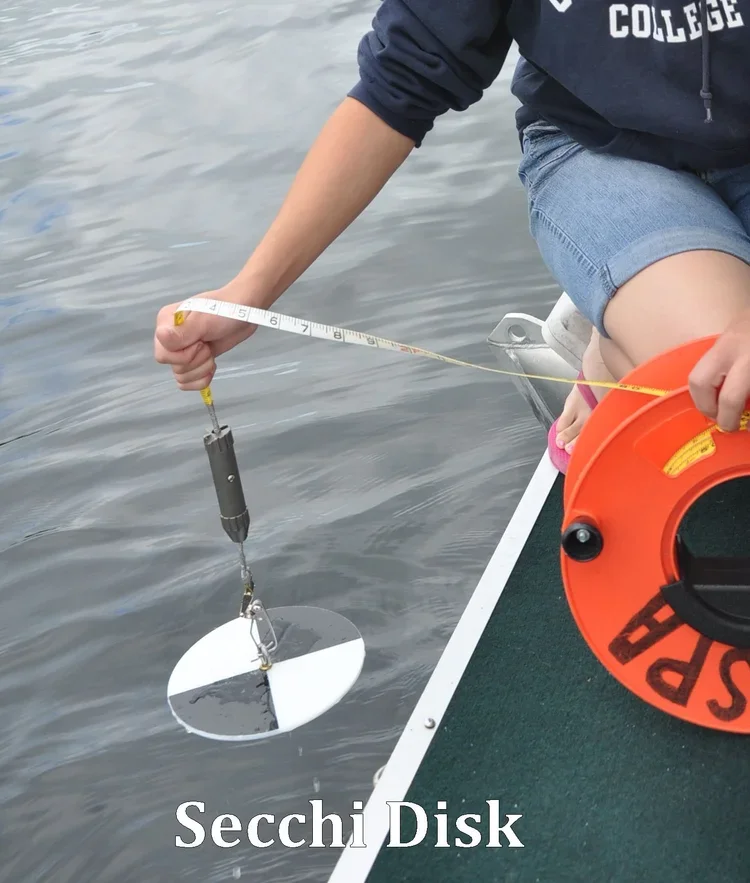
Transparency (Secchi Disc) - Measures how far one can see into the water with a black and white metal disc at the in-lake sites. Transparency is affected by the growth of algae and cyanobacteria, the presence of organic and inorganic particles in the water column, and the color of the water. Visibility of the disc is measured to hundredths of a meter from the water surface. Measurements in the 2 - 4.5m range are considered ‘good’ by NHDES. The visibility in Lake Sunapee falls between 7 - 9m.
Turbidity - a measure of the suspended particulate matter in the water. This can include fine sediments, such as clay, silt, fine sand, and organic particulates, as well as micro-organisms. It is measured in Nephelometric Turbidity Units (NTUs). The turbidity is usually very low in Lake Sunapee and varies widely in tributary waters.
LAKE INFORMATION MAPPER
The New Hampshire Department of Environmental Services (NHDES) has created an interactive surface water quality map that provides links to historical and current lake trophic survey reports, current volunteer lake assessment program reports, exotic aquatic species distribution information and mercury in fish tissue data. More than 2,000 reports on greater than 1,000 lakes from 1975 to 2020 are available via this map.
Zoom in and click on Lake Sunapee or other waterbodies located within the watershed to access a pop up menu that displays the lake name, waterbody ID, trophic status, reports by year, and other information. TIP: Try a different browser if mapper isn’t working.
LSPA Water Quality Lab at Colby-Sawyer College
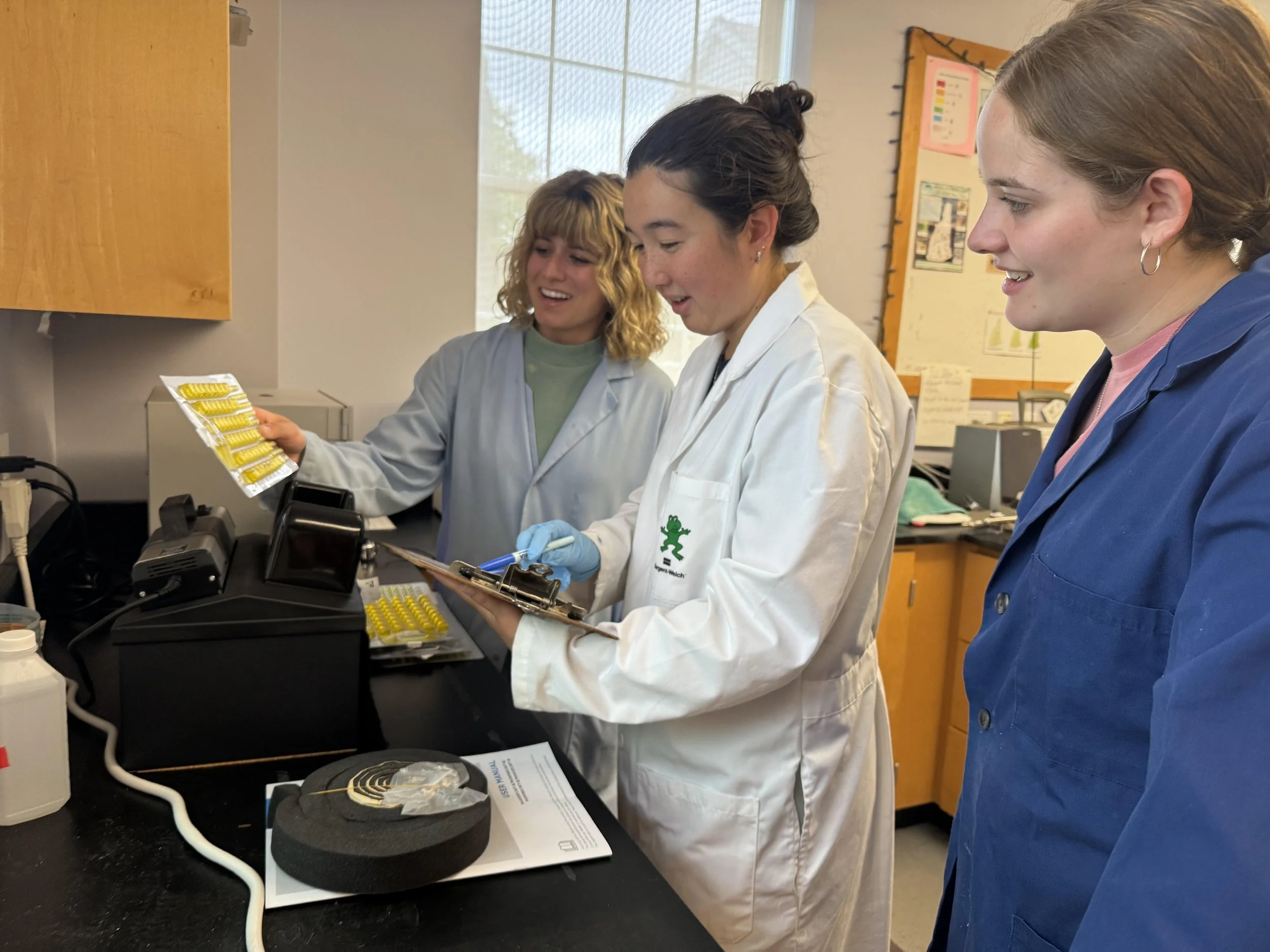
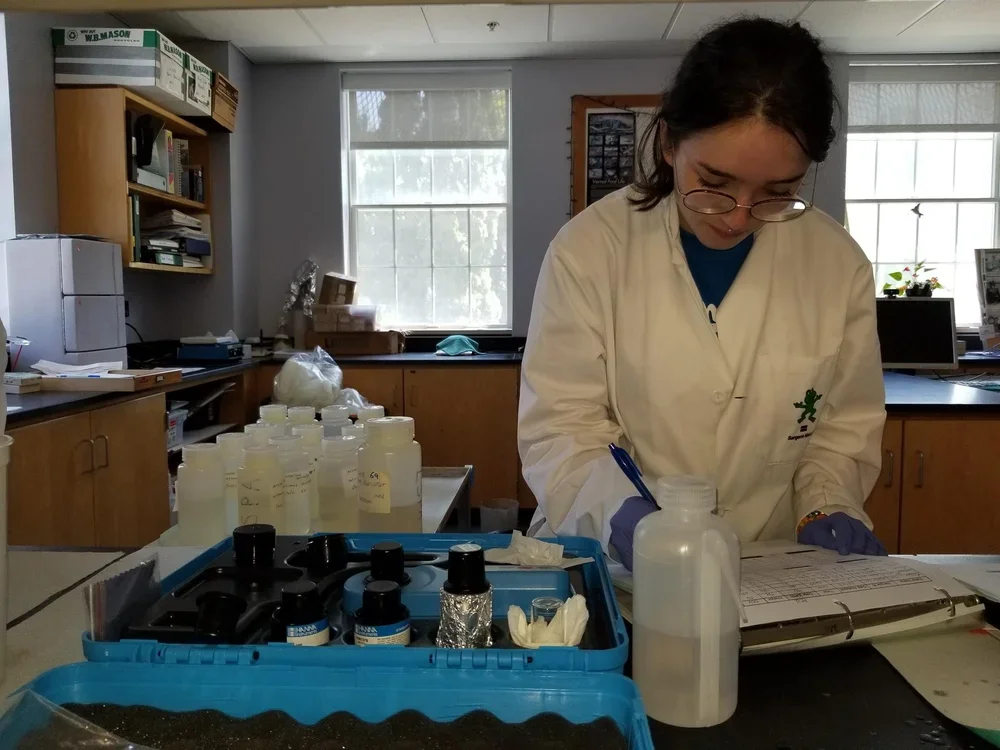
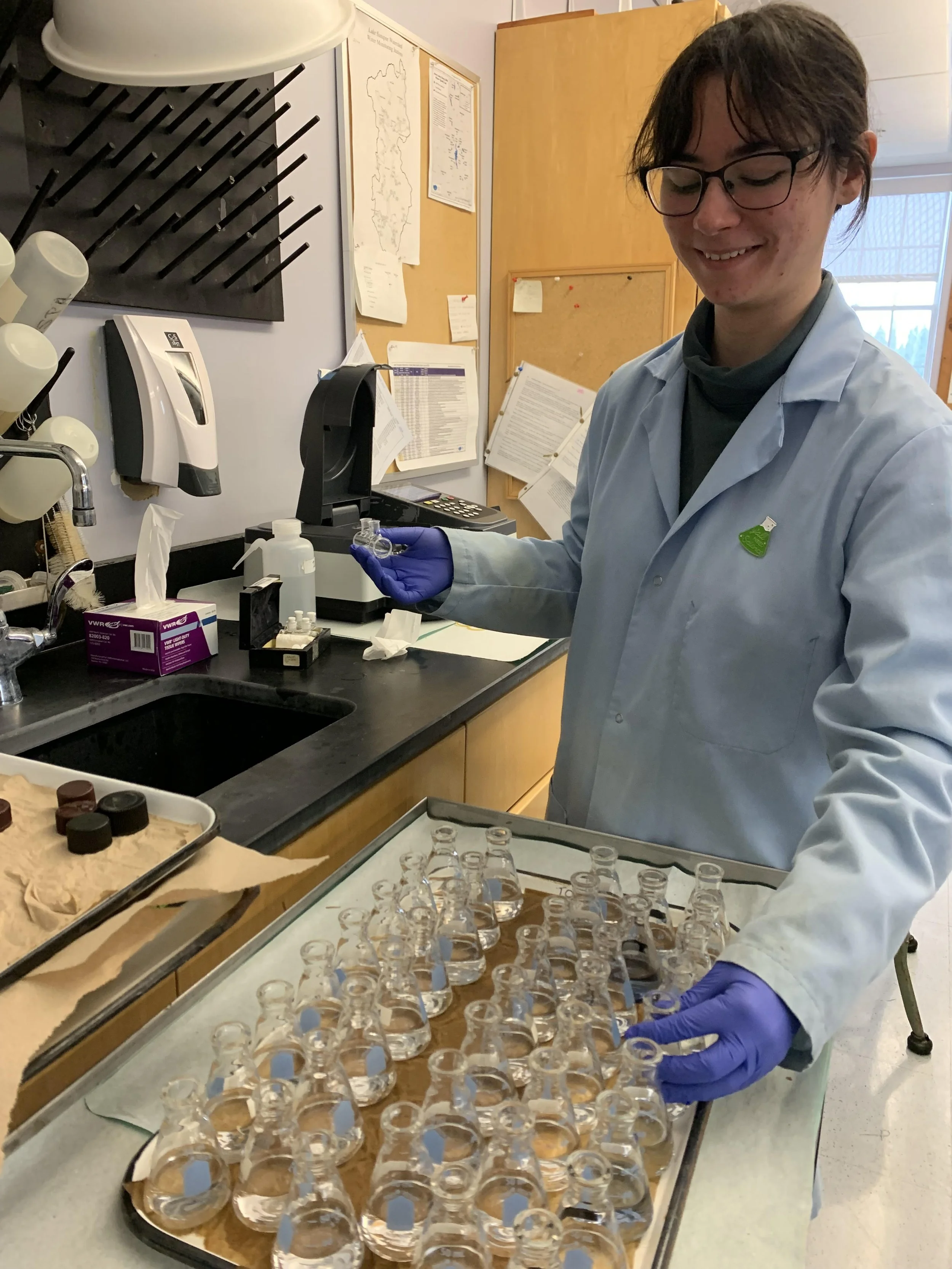
LSPA’s water quality lab is housed at Colby-Sawyer College (CSC) and managed in partnership with the New Hampshire Department of Environmental Services (NHDES). This facility serves as the only NHDES satellite water quality lab in the state of NH. The lab analyzes water samples from over 24 lakes in New Hampshire and regularly conducts water quality tests at 80 sites in the Lake Sunapee Watershed. Our lab also contributes about 25% of the VLAP data for the state.
After samples are collected in the field, they are delivered to the lab for analysis. The analyzed parameters, described above, are recorded and compared over time to determine the health of our lakes and streams and to highlight any long term trends. Click here to learn more about trends and concerns in the Lake Sunapee Watershed.
LSPA Laboratory Internships
LSPA hires interns to assist with water quality monitoring during the summer. In these internships students:
Gain knowledge about the parameters used to measure water quality including pH, conductivity, turbidity, E.coli, chlorophyll-a, and total phosphorus
Master all areas of water quality testing, including sample collection, handling, and data management.
Perform appropriate Quality Control/Quality Assurance procedures with appropriate documentation.
Understand how human activities affect water quality and watersheds.
Learn about the operation of a non-profit organization.
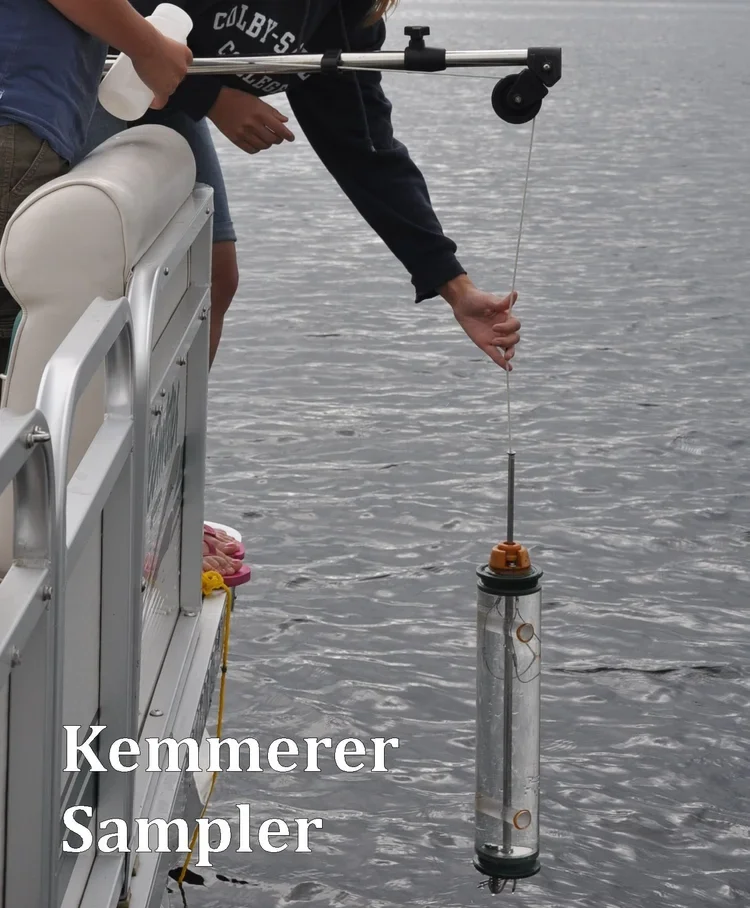
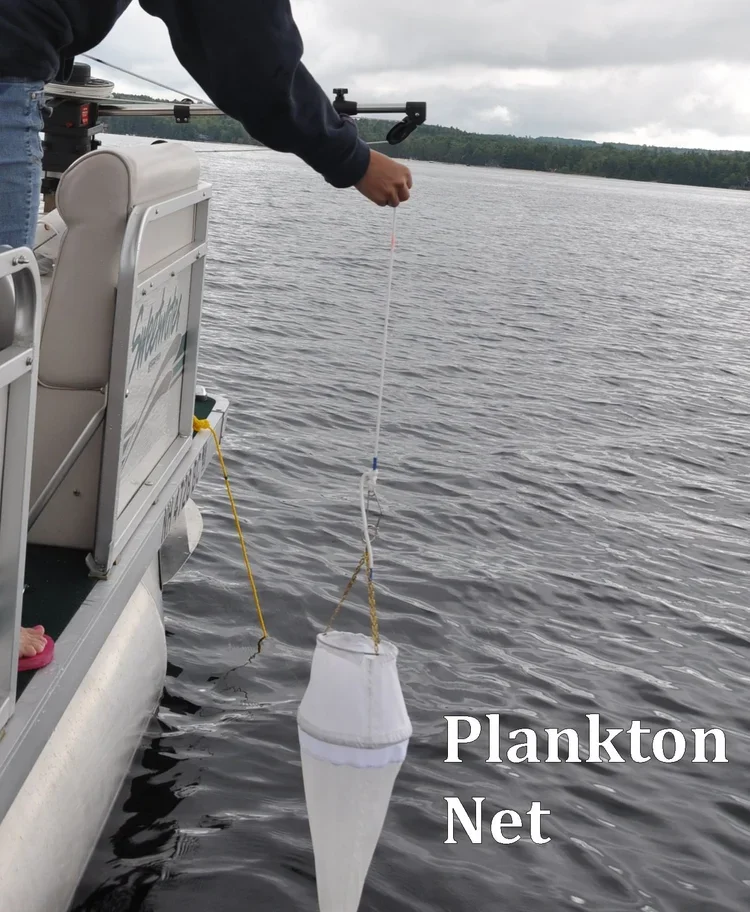
LPSA staff and volunteers collect water samples and data by taking surface grabs (or dips) and by using five kinds of sampling equipment. Learn how and why LSPA takes water samples at four deep basin sites in Lake Sunapee.
Kemmerer Water Sampler - used for collecting a water sample at a specified depth
Secchi Disk - used to measure the clarity of the water column
Integrated Hose Sampler - used to sample algal content of the water column
Water Quality Sonde - A multiparameter instrument used to record in-lake water quality profiles. LSPA’s hand-held sonde records depth, temperature, dissolved oxygen, specific conductance, turbidity, chlorophyll-a and phycocyanin (used to detect presence of cyanobacteria).
Plankton Net - used to collect microscopic plankton. A plankton net has a large enough mesh to let water molecules pass through, but small enough to trap plankton. It can be dropped down vertically in the water column and slowly pulled to the surface, trapping the organisms inside and letting the water flow out. Or it can be pulled along the surface of the water for a certain distance, still allowing the water to flow out and the organisms to be kept inside. This concentrates the organisms so that scientists can identify the plankton and determine the relative number of species that are in the water body.