
sewer Systems
Did you know that, as a landowner, you are responsible for the maintenance of all components on your property, including any pumps, valves, and pipes that connect to the town sewer line? A well-cared-for sewer system prevents unplanned costly repairs, expensive cleanup fees, sewage backups, and basement leaks and spills that can lead to the pollution of a nearby lake, pond, or stream. For a list of professionals that can service your system, click on the button below.
Homes or businesses have one of two sewer system types:
The first type includes a pump chamber where waste from a home or business is grinded and pumped into a pressure sewer main typically located in the street.
The second type is gravity fed where waste from a home or business flows downhill into a sewer main typically located in the street.
Not sure what type of system you have? Knowing the type of system on your property will determine the type of maintenance required. Review the real estate documents you received when you purchased your property. They should state which type of system you have. If you are unsure what system you have, you can also call a local plumber for help.
Click one of the buttons to learn more about how each system works and the best maintenance practices for each.
Sewer Pump Systems
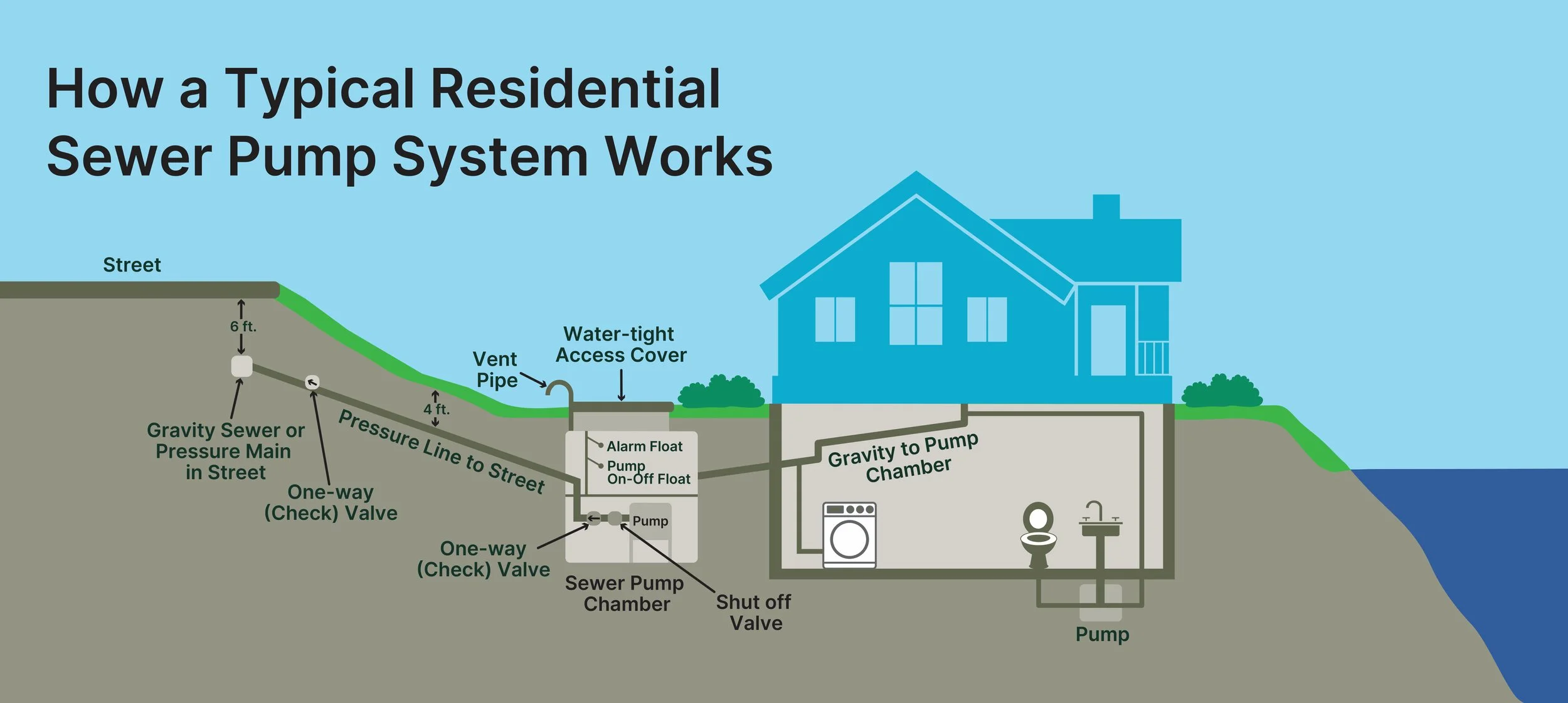
Why Sewer Pump Systems Fail:
Routine maintenance has not been done.
Grit and water have entered the pump chamber from a loosely fit cover prematurely wearing out the pump.
Grease and non-flushable products have been flushed down the drain clogging the system.
Components have reached the end of their lifespan and stopped working.
The one-way (check) valve has failed, allowing sewage to back up into the basement.
What Happens When Your System Fails:
Sewage can back up into your basement. Waste may flow out of the basement and across your property polluting nearby waterways.
Toilets, sinks and showers drain slowly or not at all.
You face the immediate need to repair or replace failed components and clean up hazardous spills.
How to Care for Your Sewer Pump System:
Flush only toilet paper and human waste. Don’t flush wipes, hygiene products, or paper towels, even if they claim to be flushable.
Don’t dispose of grease, chemicals, expired medicine, or paint down the drain and limit the use of the garbage disposal as the treatment system is primarily designed to treat human waste.
Check plumbing fixtures such as toilets and sinks for leaks that result in excess water use which can prematurely wear out your pump. Replace sink faucet and shower valve seals if dripping when fully closed (can be done yourself or by a plumber). Make sure the toilet tank float valves shutoff water flow when the upper level is reached. Stuck or broken float valves will continuously cause water to flow into the overflow tube. Replace/repair yourself or hire a plumber.
Make sure there is no woody vegetation growing on top or near the pump chamber to prevent roots from hindering access to the cover.
Every five years hire a professional to:
Clean the grinder pump and chamber to remove built-up grease, which clogs pipes and reduces chamber holding capacity.
Test grinder pump operation and chamber high-level alarm system to make sure they are operating correctly.
Inspect the condition of the pump chamber cover to make sure it is preventing water and grit from entering the tank. Grit dulls the grinder blade, and additional water overworks the pump system.
If your high-level pump chamber alarm doesn’t currently notify you on your phone, hire a professional to upgrade the alarm to alert you of a possible pump failure or basement spill. If upgrading the alarm system is not feasible or prohibitively expensive, consider installing a moisture sensor alarm system in your basement that alerts you on your phone when triggered.
Consider replacing the grinder pump if it’s over 25 years old to avoid a sudden unplanned failure of your system.
Consider installing a one-way (check) valve as close to the town pressure main as possible for added sewer leak protection. Coordinate installation with the Sunapee Water & Sewer Department
Gravity Sewer Systems
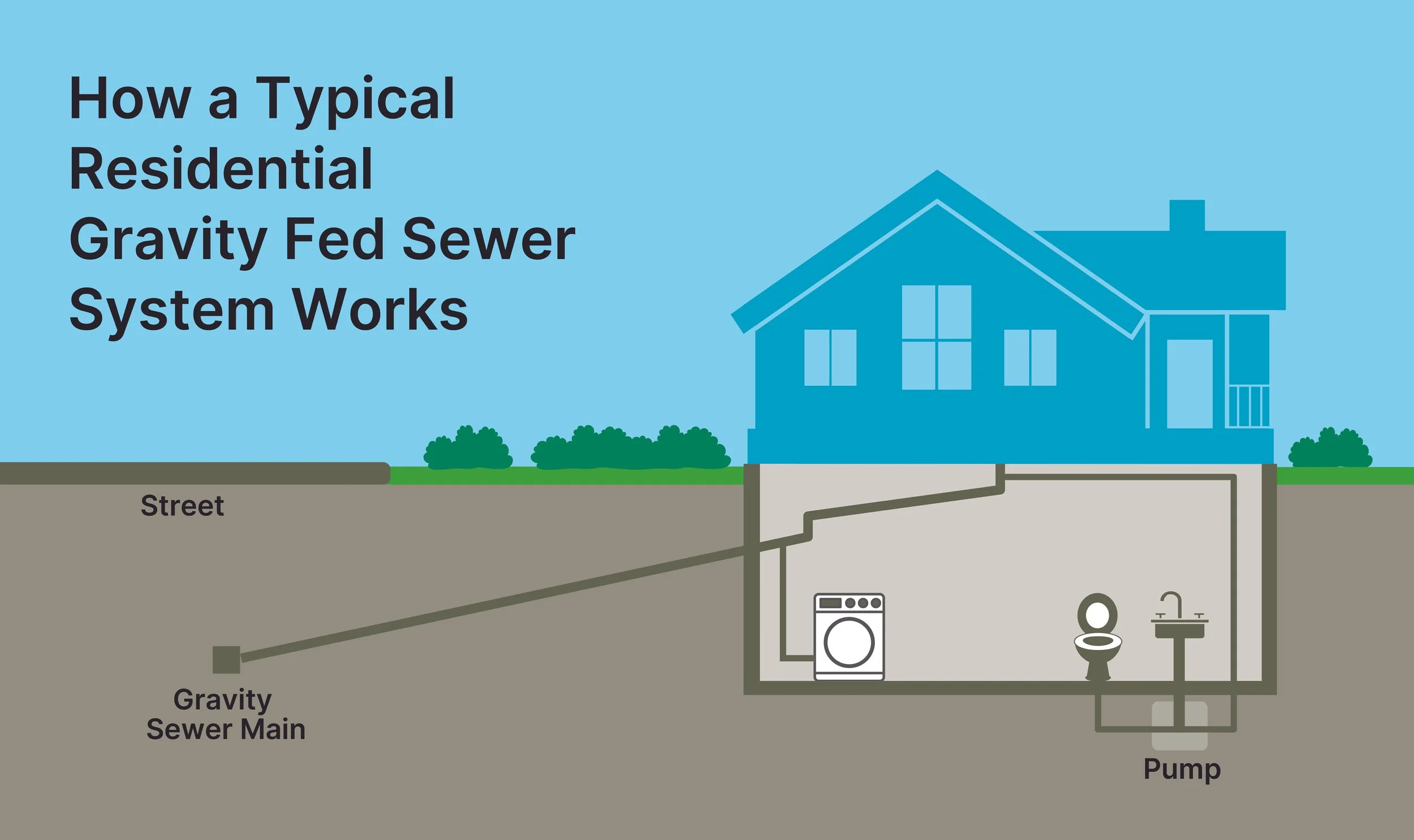
These systems do not have a separate chamber with a grinder pump but they may have a wet well pump located in the lower basement level. A wet well pump moves waste from sinks, toilets or washing machines on basement levels into the gravity line leaving the house.
How to Take Care for Your System:
Flush only toilet paper and human waste. Don’t flush wipes, hygiene products or paper towels, even if they claim to be flushable as they can clog pipes.
Don’t dispose of grease, chemicals, expired medicine or paint down the drain and limit the use of the garbage disposal as the treatment system is primarily designed to treat human waste.
Check plumbing fixtures such as toilets and sinks for leaks that result in excess water use, potentially driving up service fees. Replace sink faucet and shower valve seals if dripping when fully closed (can be done yourself or by a plumber). Make sure the toilet tank float valves shutoff water flow when the upper level is reached. Stuck or broken float valves will continuously cause water to flow into the overflow tube. Replace/repair yourself or hire a plumber.
If you are experiencing slow drainage in sinks, toilets, bathtubs and showers, have a plumber check the sewer lines for blockages often caused by grease, wipes and other materials that may have been dumped or flushed down the drain. If slow drainage conditions are also occurring in the basement, be sure to have the plumber inspect the wet well pump to make sure it is working correctly.
Need to Find a Professional to Service Your System?
Below is a list of local service professionals that maintain sewer system components (not all inclusive). LSPA does not promote or endorse any of the companies listed.
Tank Pumpers (if you have a pump chamber)
Abbott Septic - 603-826-0337
Byron’s Septic - 603-735-4414
Henniker Septic - 603-428-3351
Mckenzie Septic Service - 603-542-5085
New London Septic Service - 603-428-3351
Ron’s John’s Chemical Toilets - 603-542-3865
Stearns Septic Service - 603-442-9500
Component Repair & Replacement
AA Sewer & Drain Maintenance - 603-454-4850
Beard Sewer & Drain - 866-766-8376
Clayton A. Miller - 603-526-4710
Henniker Septic - 603-428-3351
Pump Systems - 603-934-7100
S.E. Utilities - 603-341-2835
Stearns Septic Service - 603-442-9500
General Plumbers
Dunnell’s Plumbing & Heating - 603-763-0126
Kelley Plumbing & Heating - 603-863-1719
Lake Sunapee Plumbing & Heating - 603-863-2430