Interns & Fellows
Water Quality Interns
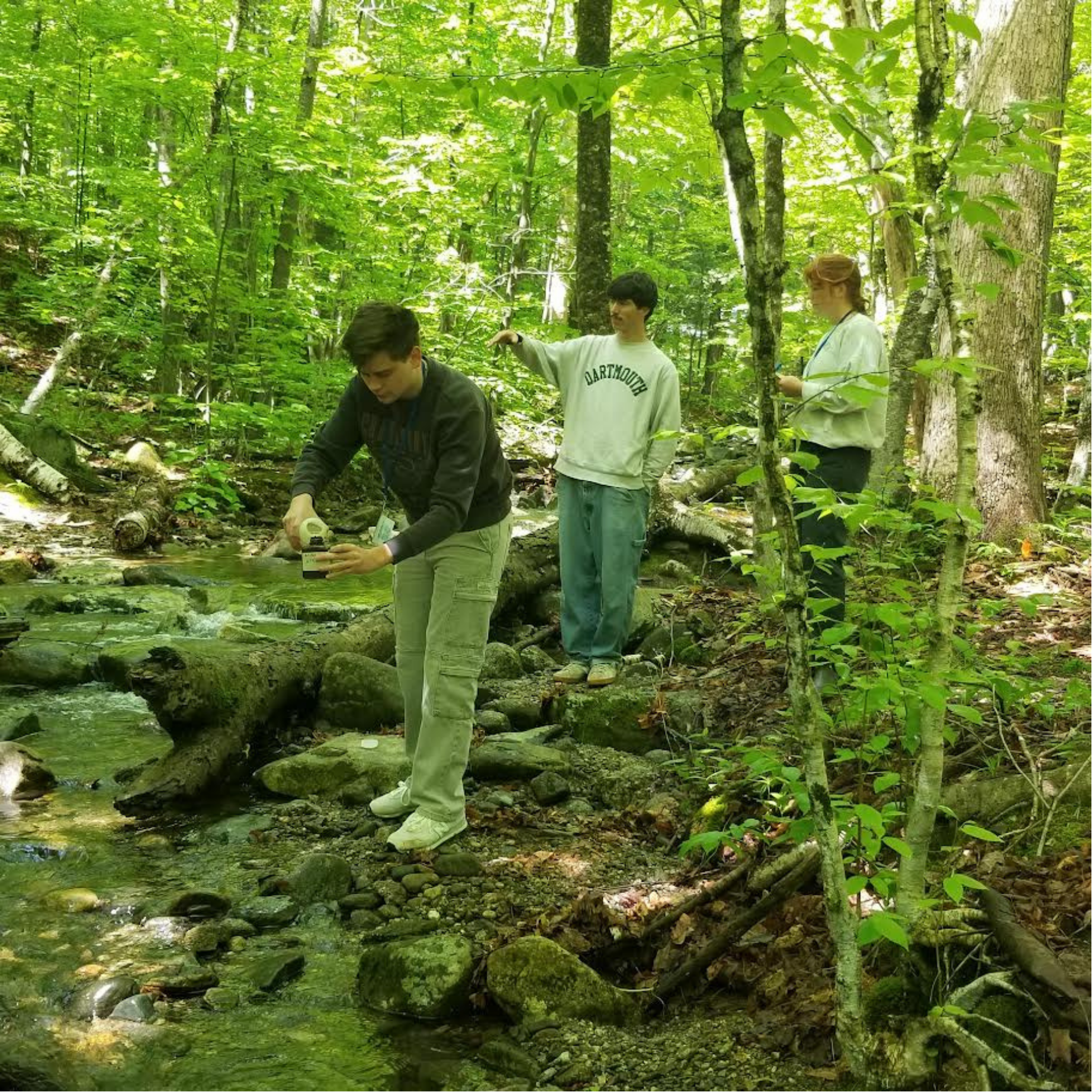
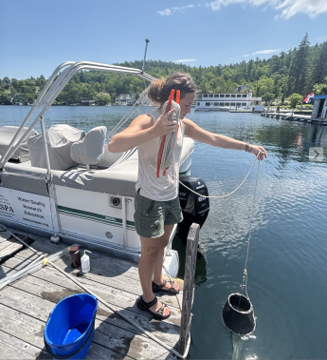
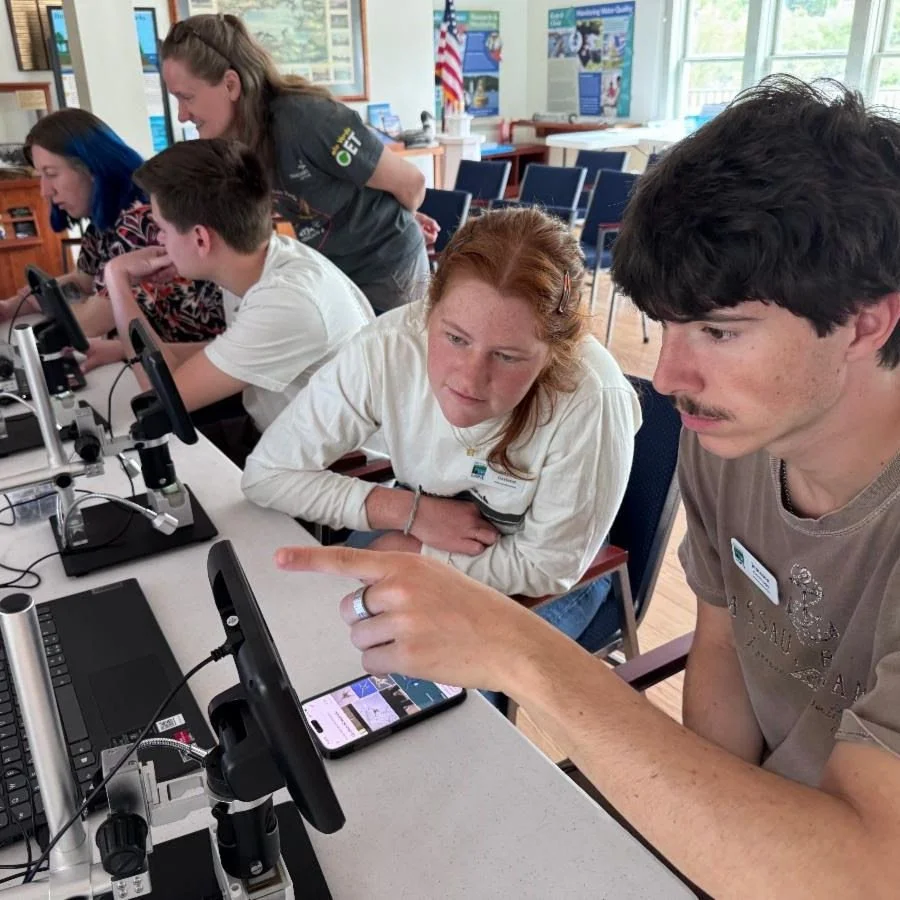
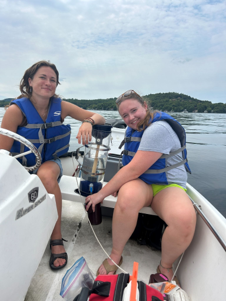
LSPA hires interns to assist with water quality monitoring during the summer. In these internships, students:
Gain knowledge about the parameters used to measure water quality, including pH, conductivity, turbidity, E.coli, chlorophyll-a, and total phosphorus
Master all areas of water quality testing, including sample collection, handling, and data management.
Perform appropriate Quality Control/Quality Assurance procedures with appropriate documentation.
Understand how human activities affect water quality and watersheds.
Learn about the operation of a non-profit organization.
Visit our employment page to become next year’s Water Quality Intern
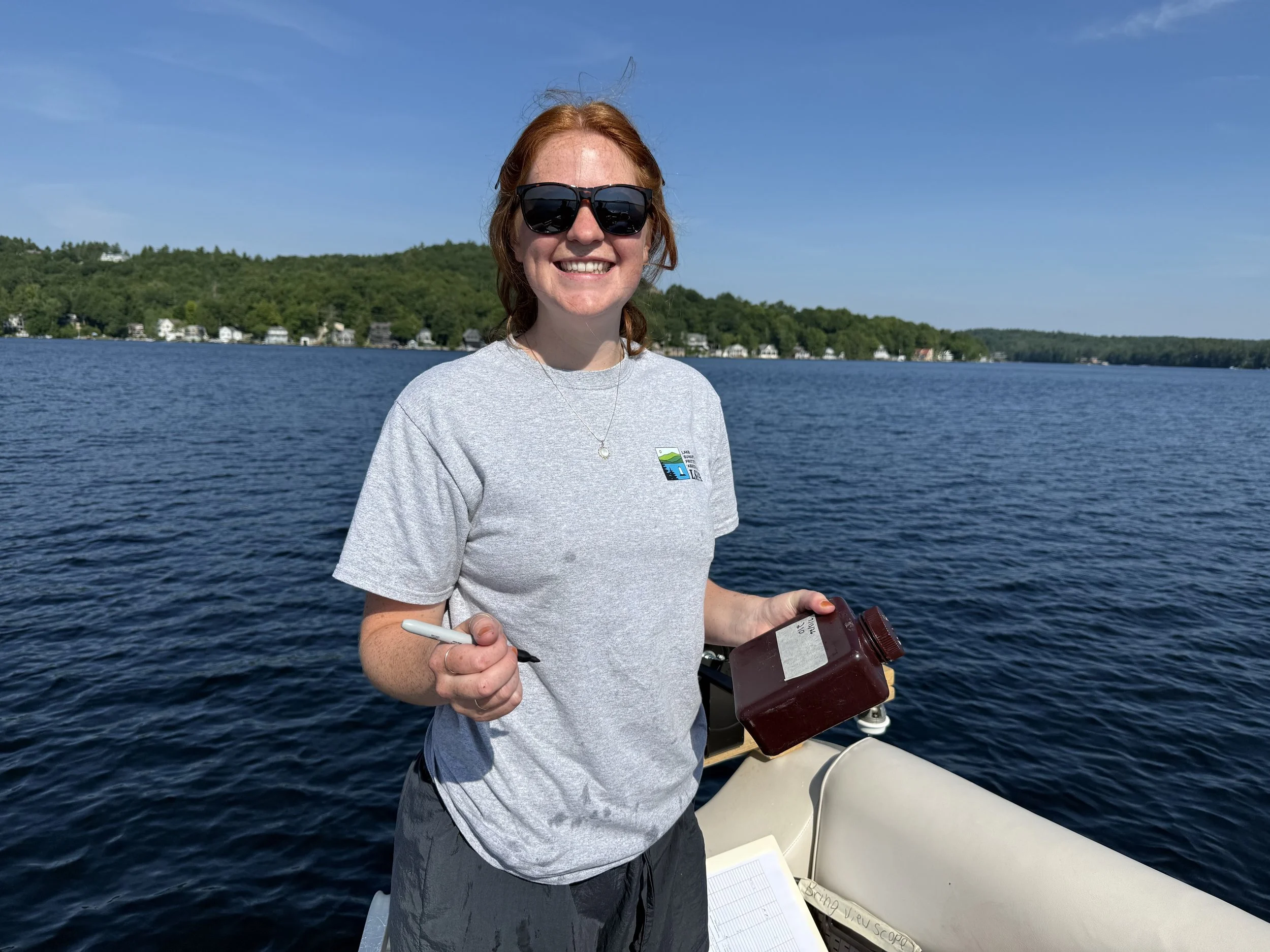
Saylor Garland
This summer, Saylor expanded her knowledge of freshwater environments while gaining valuable experience working in a lab setting. One of her favorite parts of the summer was getting to work alongside the LSPA and Colby-Sawyer College crews and learning more about the lake she grew up on. She especially enjoyed swimming with everyone, canoeing, and trivia, as well as spending time on Lake Sunapee and at the Eliassen Boathouse (Thank you, Midge and Tim!).
This fall, Saylor will be taking GIS courses at Northeastern and is looking forward to the return of crunchy leaves.
Camden Boisvert
Camden spent his days at the LSPA Water Quality Lab running water quality tests with the wonderful Water Quality crew. One of his favorite experiences was the Dutchman Tributary and Morgan Pond hike. Camden also enjoyed learning about the role phosphorus plays in lake ecosystems and how vegetative buffers help protect against erosion.
This fall, he’ll begin work on his full-year senior thesis at the University of New Hampshire. Camden shared that LSPA will definitely be a core memory of his college years.
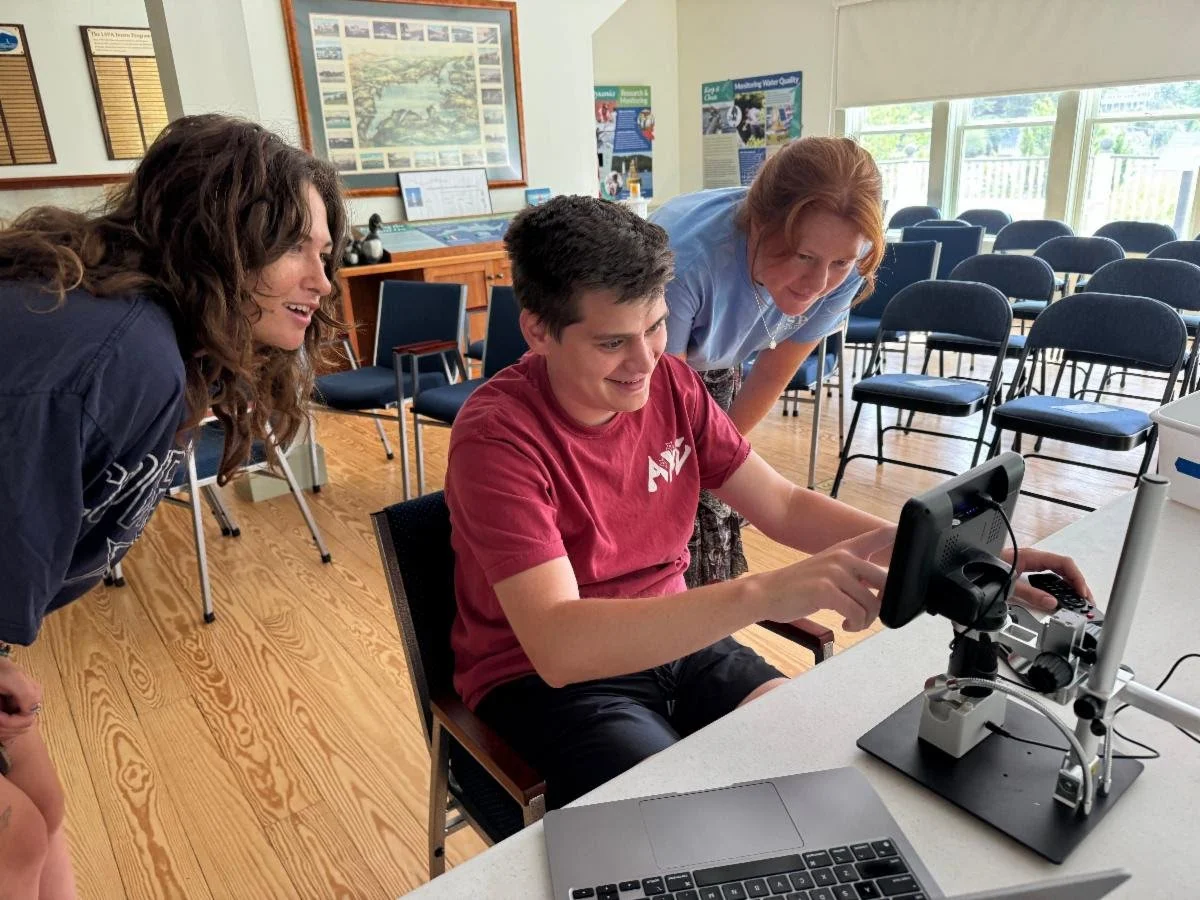
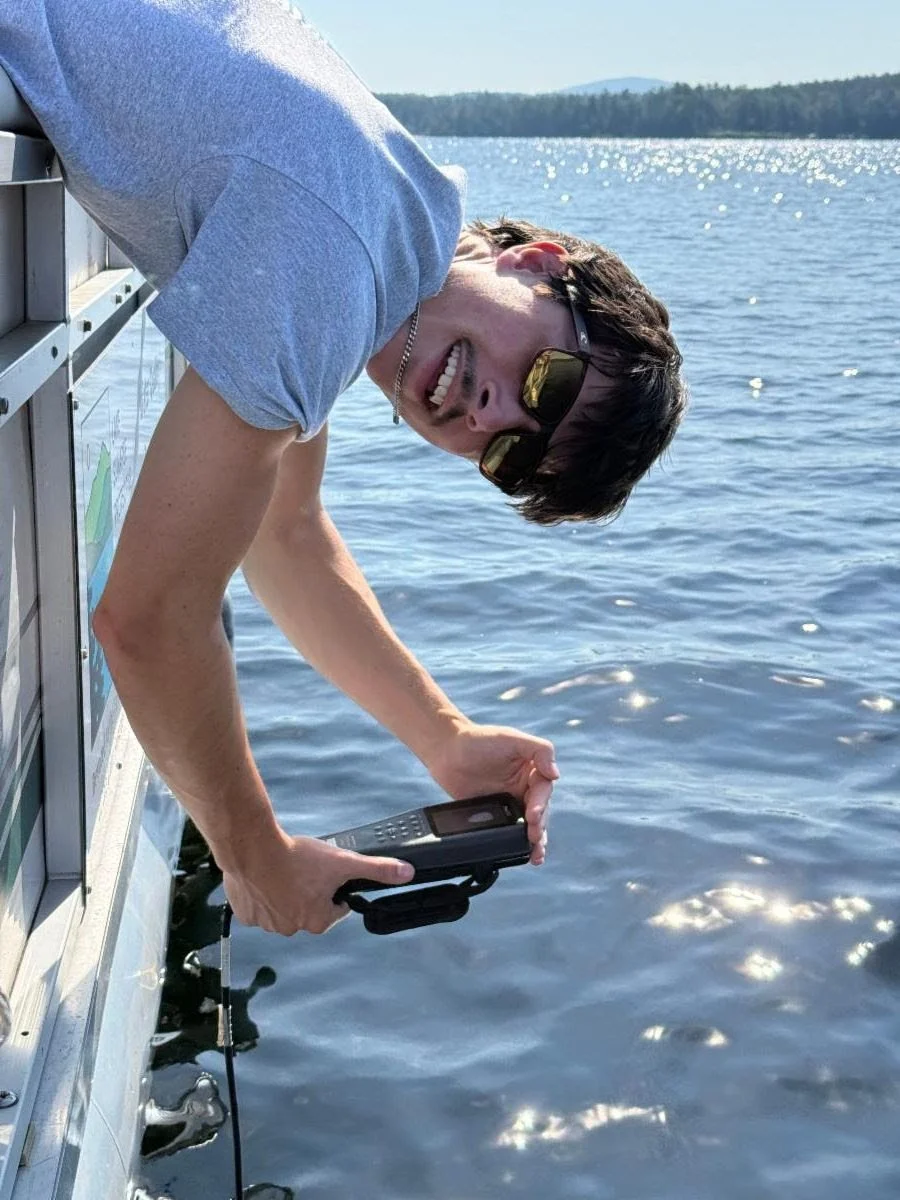
Jameson Carmody
Jameson gained valuable lab experience and enjoyed learning the entire water quality monitoring process, from collecting samples to running tests and entering data. He also developed his GIS skills while working in the new Water Quality database. One of his favorite parts of the summer was sampling from the LSPA boat—and taking the occasional swim in Lake Sunapee! Most importantly, Jameson shared that the internship changed the way he thinks about his future career goals.
After his experience with LSPA, he hopes to find a career that allows him to do work similar to what he experienced this summer.
LSPA-VT Calhoun Fellows
The LSPA-VT Calhoun Fellowship supports early-career researchers from Virginia Tech to conduct collaborative research on Lake Sunapee and its watershed.
This program advances the long-term resilience of Lake Sunapee and its watershed, while also cultivating the next generation of environmental leaders in partnership with the Lake Sunapee Protective Association. This fellowship builds on the Calhoun’s long-term philanthropy to Virginia Tech (Dave’s alma mater) and LSPA.
Read their LSPA-VT Calhoun Fellowship Summer 2026 Report here
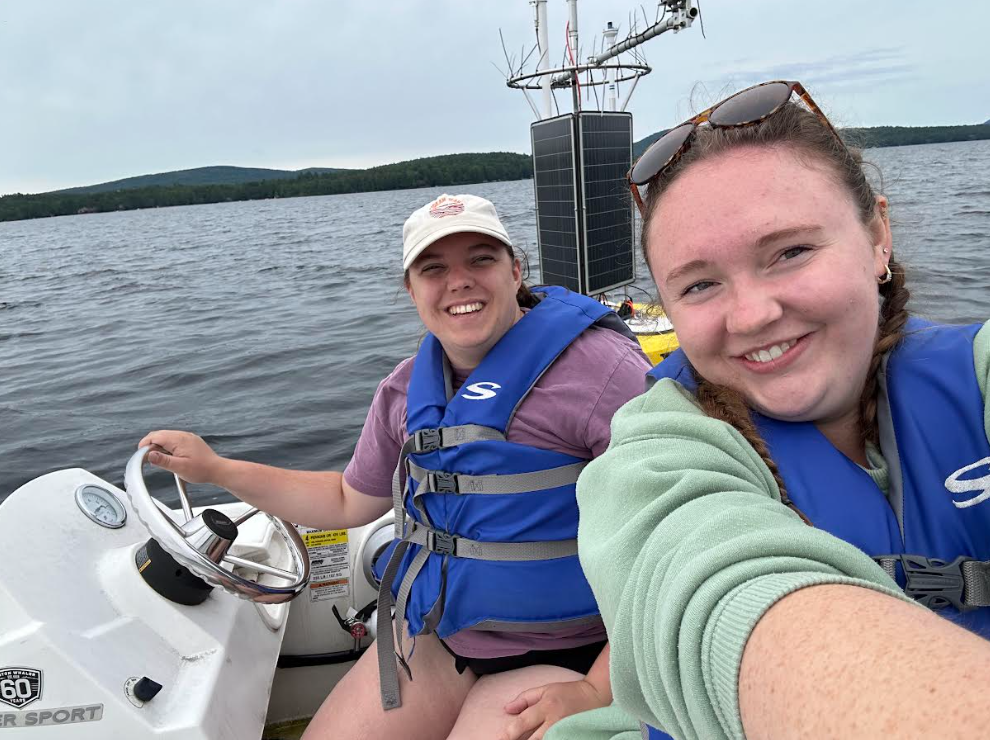
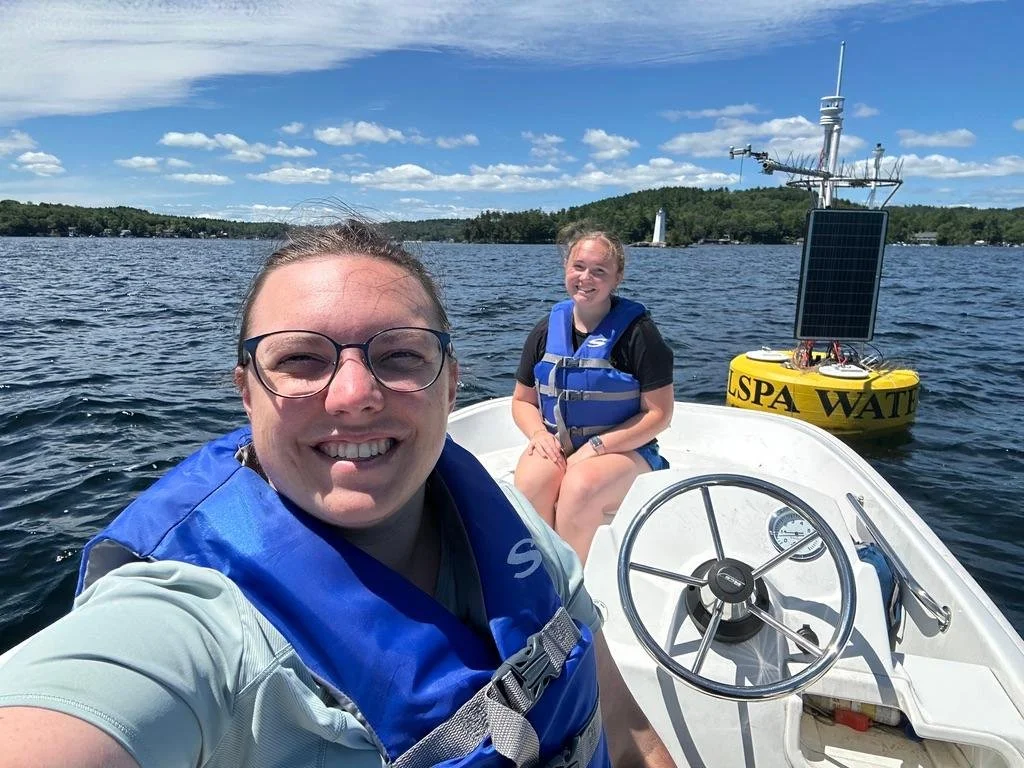
Katie Hoffman
Katie, along with LSPA-VT Calhoun Fellow Kat, did a little bit of everything this summer, from lake and stream sampling to surveys and community outreach. Through distributing her cyanobacteria forecast survey to Lake Winnipesaukee residents, she learned about different lake communities and the similar challenges we all face and discovered that knocking on the doors of random strangers in New Hampshire isn’t quite as scary as it sounds. Her favorite summer activity was the Loon Cruise, along with a four-day trip to Acadia National Park.
This fall, Katie will dive into plenty of writing and chemistry work and is looking forward to taking a science policy and economics class. We will see her again in early November when she assists with bringing the LSPA Water Quality Buoy to its winter home in Sunapee Harbor.
Kat Myer
Kat kept busy with lake and tributary sampling, buoy upkeep, cyanobacteria forecast survey distribution, and organizing the scientific paper reading group for Interns and Fellows. She is especially proud of the cyanobacteria information packet she helped create. Her favorite part of the job was working with the buoy, and she also enjoyed learning more about social sciences and community science through the cyanobacteria forecasting surveys. Outside of work, Kat soaked up as much of the lake as possible, including kayaking around Herrick Cove from the Eliassen Boathouse, and enjoyed going on the Loon Cruise.
This fall, Kat will begin her senior year, start a new communications internship with the Virginia Master Naturalists, continue lab work with the Carey Lab at Virginia Tech, and begin her post-graduation job search!
Center for Lake Studies Intern
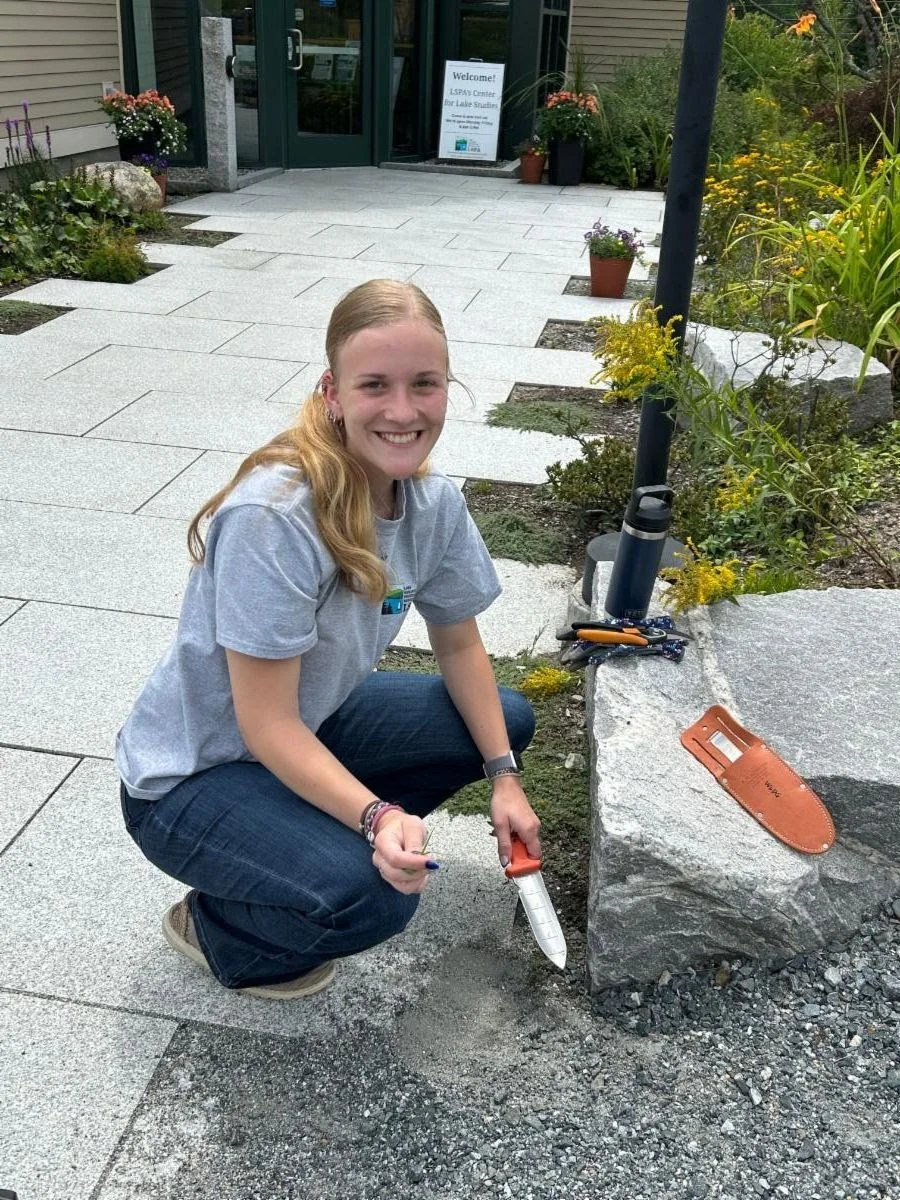
Amelia Lynch
During Amelia’s internship, she learned all about the behind-the-scenes of the LSPA, from planning large events to daily tasks. She also got the opportunity to work in the lab and gain valuable knowledge of lab procedures, from collecting samples to entering data into GIS. Her favorite thing she learned through these experiences was the impacts docks can have on lake environments. Some of her favorite memories this summer were swimming at the Eliassen’s Boathouse, hiking out to Morgan Pond, and setting up for the Annual Meeting with her fellow interns.
In the fall, she will be returning to Southern New Hampshire University for her final semester and continuing to work a few hours a week here with LSPA.
Burkehaven Fellows
In 2025, we launched the Burkehaven Fellowship, a new initiative funded by The Burkehaven Family Foundation to support and inspire the next generation of environmental leaders. These fellows develop projects that support LSPA’s mission to preserve and enhance the environmental integrity of the Lake Sunapee Watershed through education, research, and collaborative action by:
• Including civic engagement at the state and/or local level
• Incorporate interdisciplinary approaches
• Work directly with stakeholders
• Create a final public presentation given at the Center for Lake Studies
• Provide deliverables that can be used beyond the time frame of the Fellowship
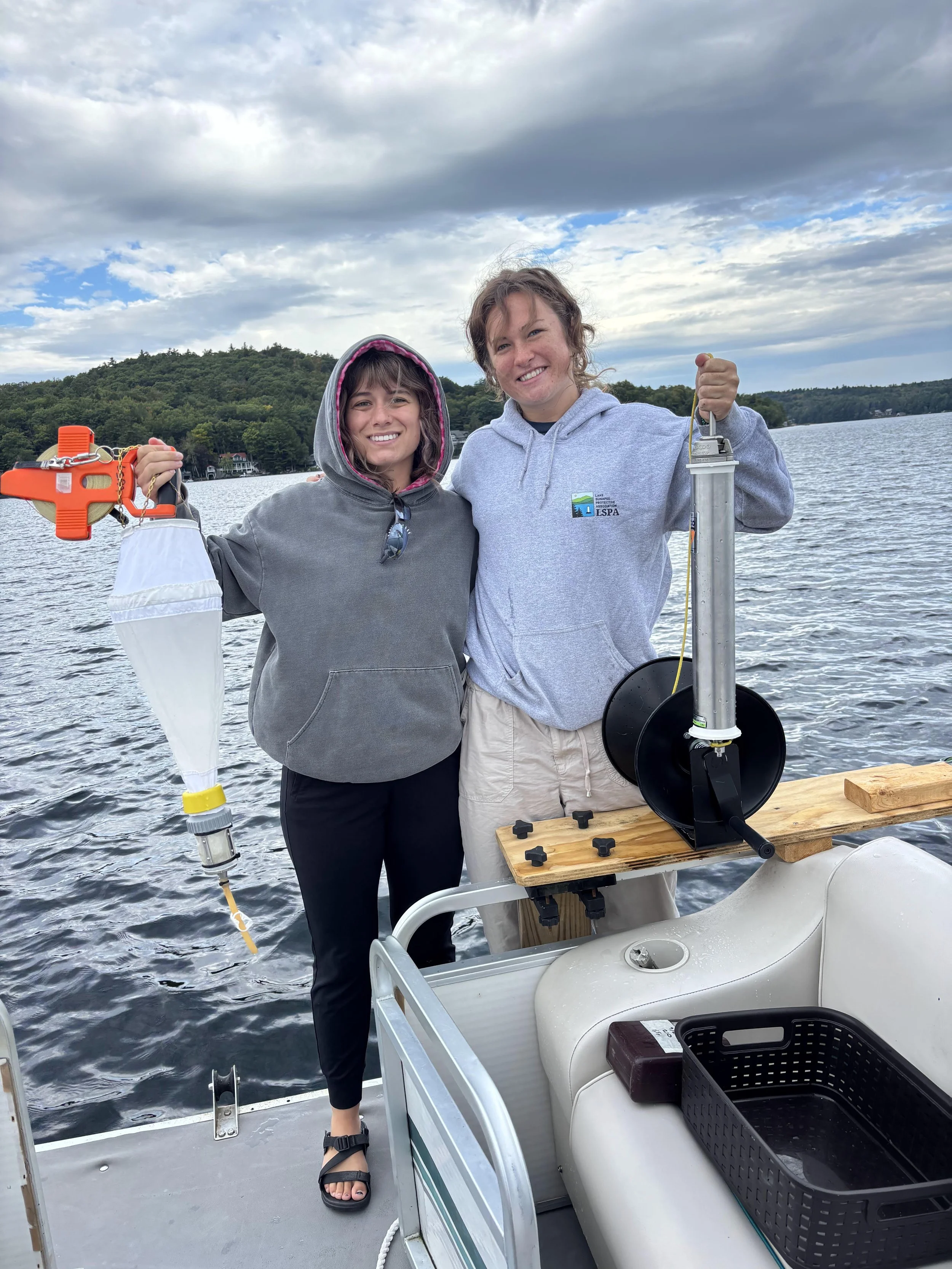
Maura Beatty
A research grant from the Farmer Lian Family funded Dartmouth researcher Dr. Jess Trout-Haney, who developed the protocol for this project and trained Maura and the water quality interns. This protocol is not meant as a real-time warning system for harmful algal blooms. Instead, the data will be used to identify patterns in the cyanobacterial populations across the watershed over the course of the summer and from year to year, increasing our ability to predict and manage cyanobacterial conditions in the lake. With water temperatures increasing over the course of the summer, we may see increased concentrations of cyanobacteria this fall. Because water warms more slowly than air, lakes often reach their highest temperatures in late July through early September. At the same time, nutrients such as phosphorus and nitrogen accumulate from runoff and may also be released from oxygen-depleted bottom sediments. Because cyanobacteria generally grow relatively slowly, these prolonged warm, stable, nutrient-rich conditions allow populations to build over time. LSPA will continue to conduct cyanobacteria sampling into the fall to measure how the late summer populations compare to those found at the beginning of the season.
With Maura on board, LSPA’s new cyanobacteria monitoring protocol is up and running! Across eleven sites and four waterbodies within the Lake Sunapee Watershed, sampling is over halfway complete for the 2026 cyanobacteria season. With the help of LSPA Water Quality Interns, she has collected and analyzed hundreds of water samples by conducting cell counts, measuring photosynthetic pigments, and testing toxin levels.
Maren Elvidge
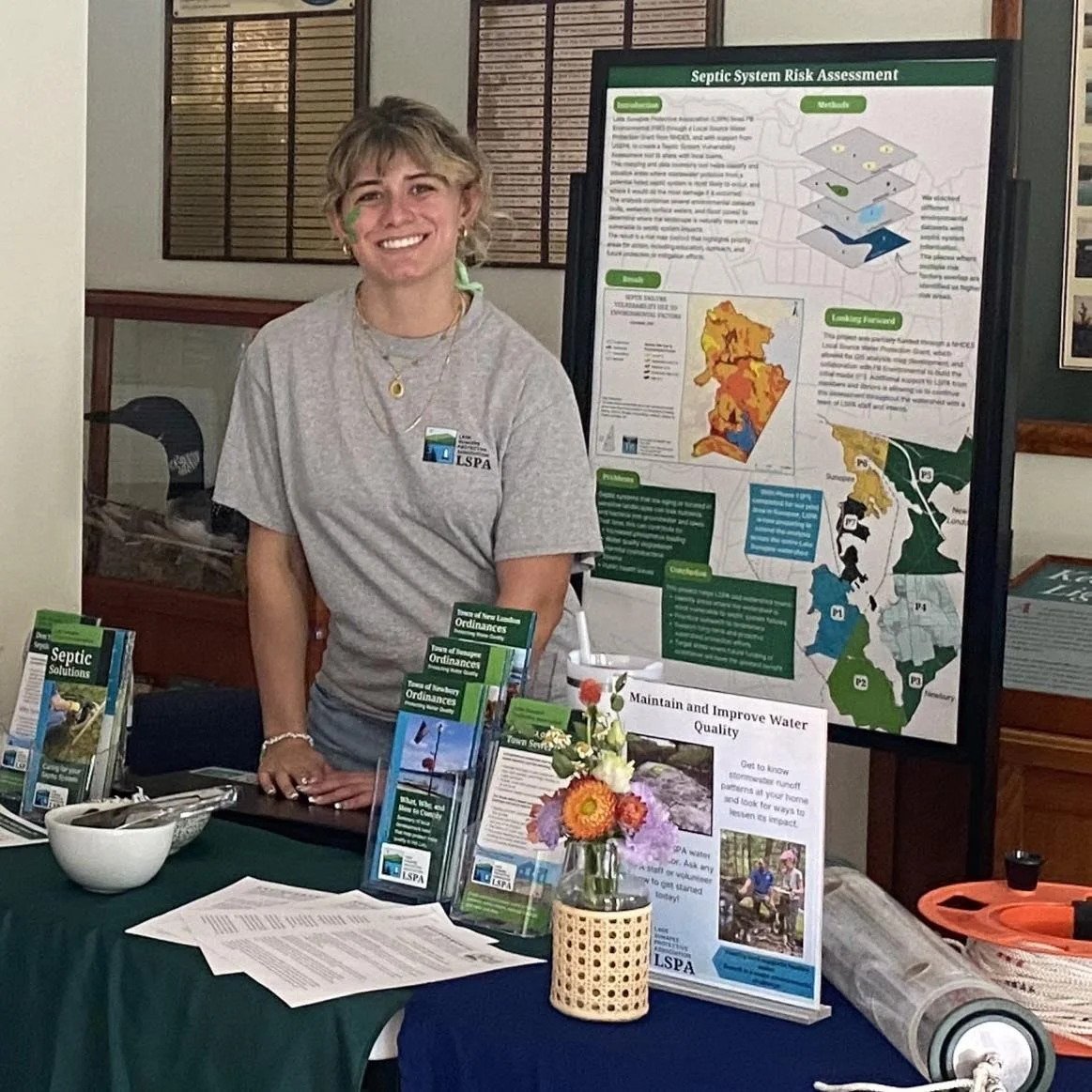
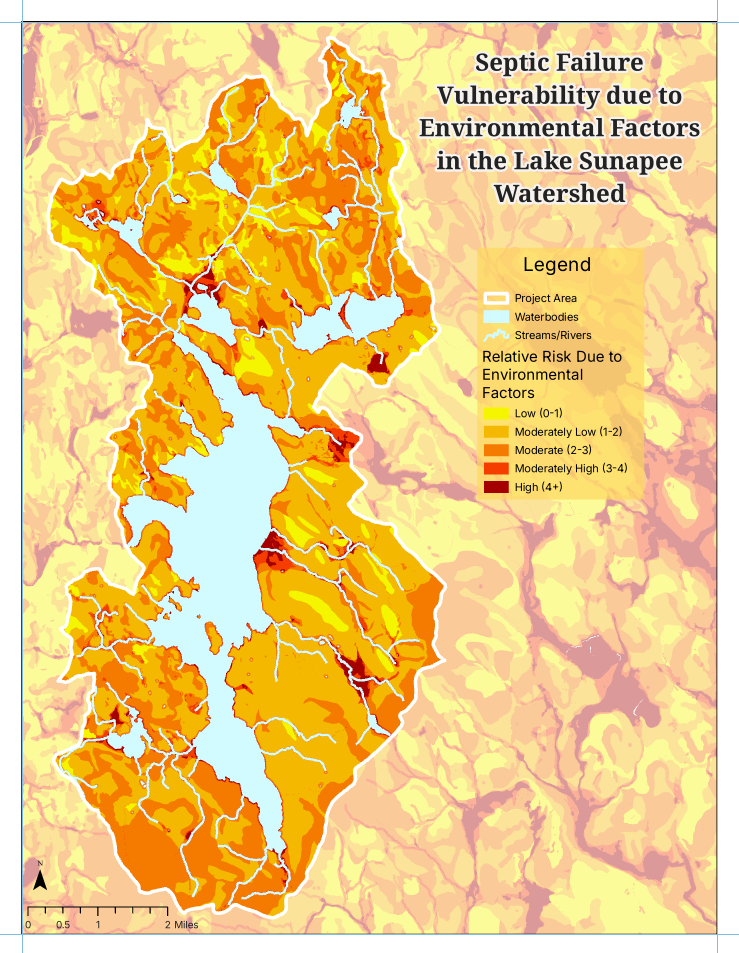
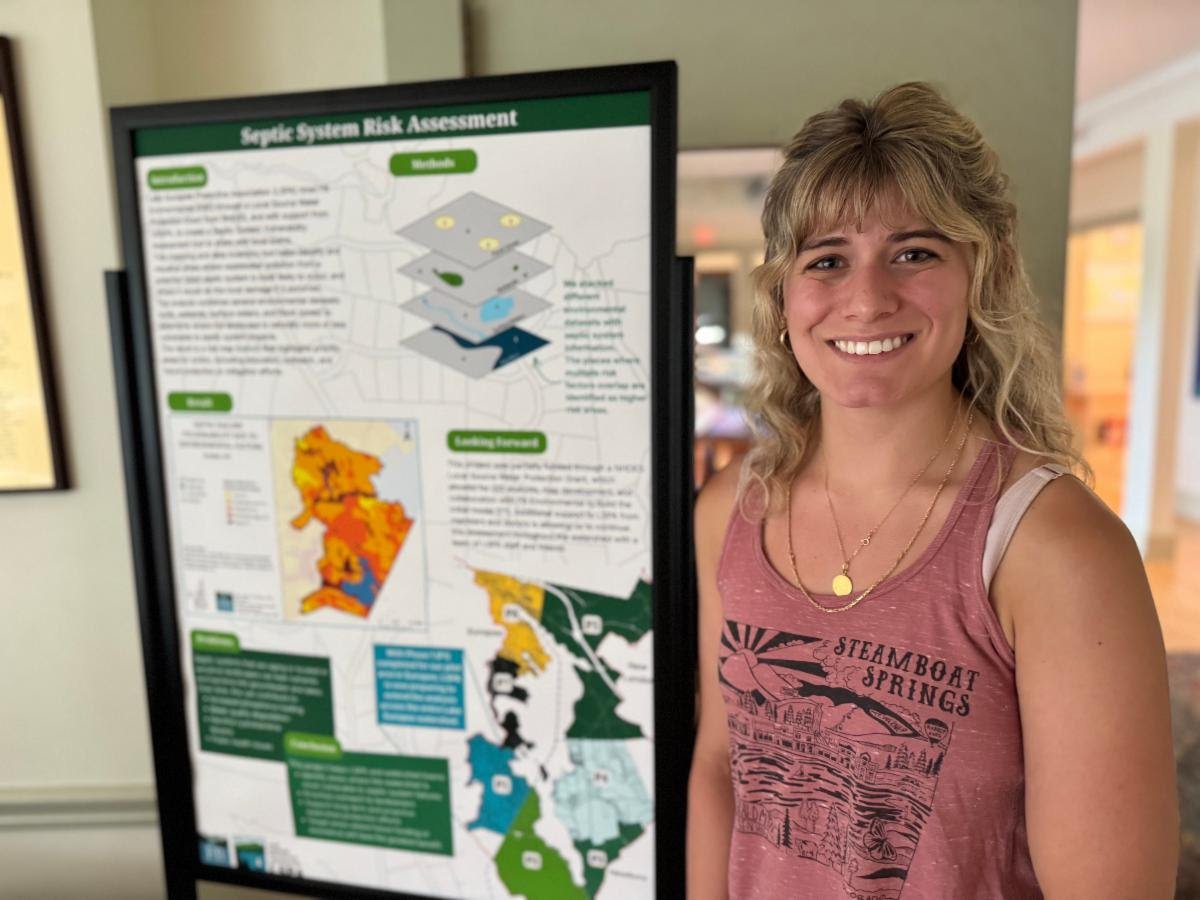
Working with Alyssa, our Science Program Coordinator, Maren is helping advance LSPA's Septic System Risk Assessment work and assisting in developing tools and materials that can be shared with watershed towns to support community education on potential septic system vulnerabilities and infrastructure risks.
By collecting data from septic plans stored in town offices, which show the location of a home's septic system, when it was installed, and soil data from that location, she’s actively helping LSPA collect information that can be used to help determine if a septic system is in a high-risk area. If the septic system were to fail, it could potentially leach the contents of the system directly into streams or lakes within the watershed. Septic systems contain waste, heavy metals, and nitrates, and these excess nutrients can cause cyanobacteria blooms. This is why proper septic maintenance is so vital to the health of the watershed. Preventing leaks, faulty pipes, and failures protects the health of the watershed.
Learn more about septic systems and proper maintenance here.