2025 Watershed Wins
In 2025, strong partnerships, dedicated volunteers, and generous donors helped LSPA advance lasting protection of the Lake Sunapee Watershed. We are grateful for this collective effort and look forward to continuing the work together. Here are our 2025 Watershed Wins:
Record-Breaking Water Quality Monitoring
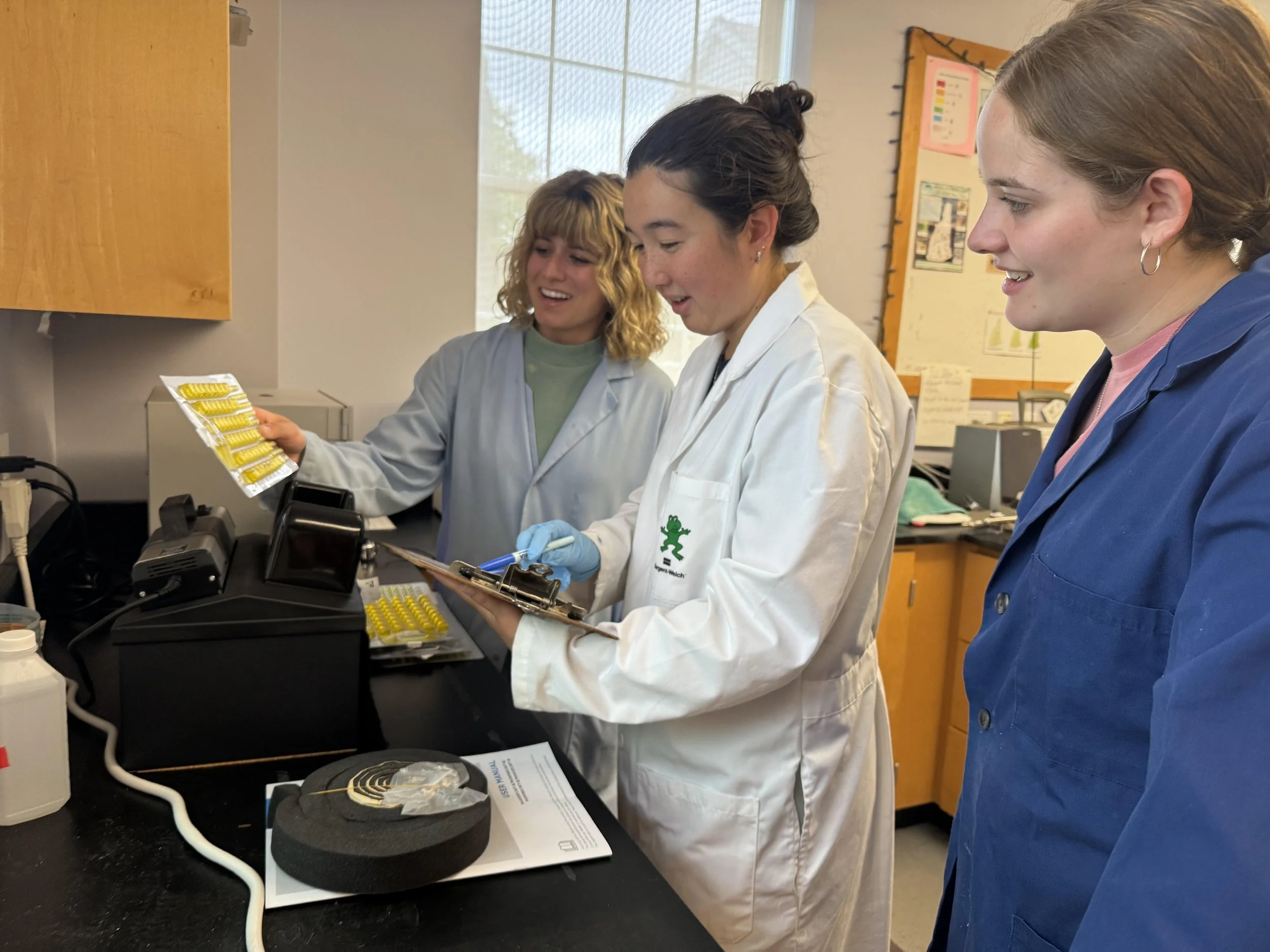
In 2025, LSPA’s water quality lab, housed at Colby-Sawyer, processed more water quality samples than ever before, thanks to motivated interns and a dedicated network of volunteers. These data provide early warning of potential concerns, build the long-term record needed to understand change over time, and support research partners working to understand the complex dynamics of the Lake Sunapee Watershed. This work reflects our commitment to rigorous science as the foundation of our work.
Click here to learn more about LSPA’s Water Quality monitoring.
Launching the Burkehaven Fellowship
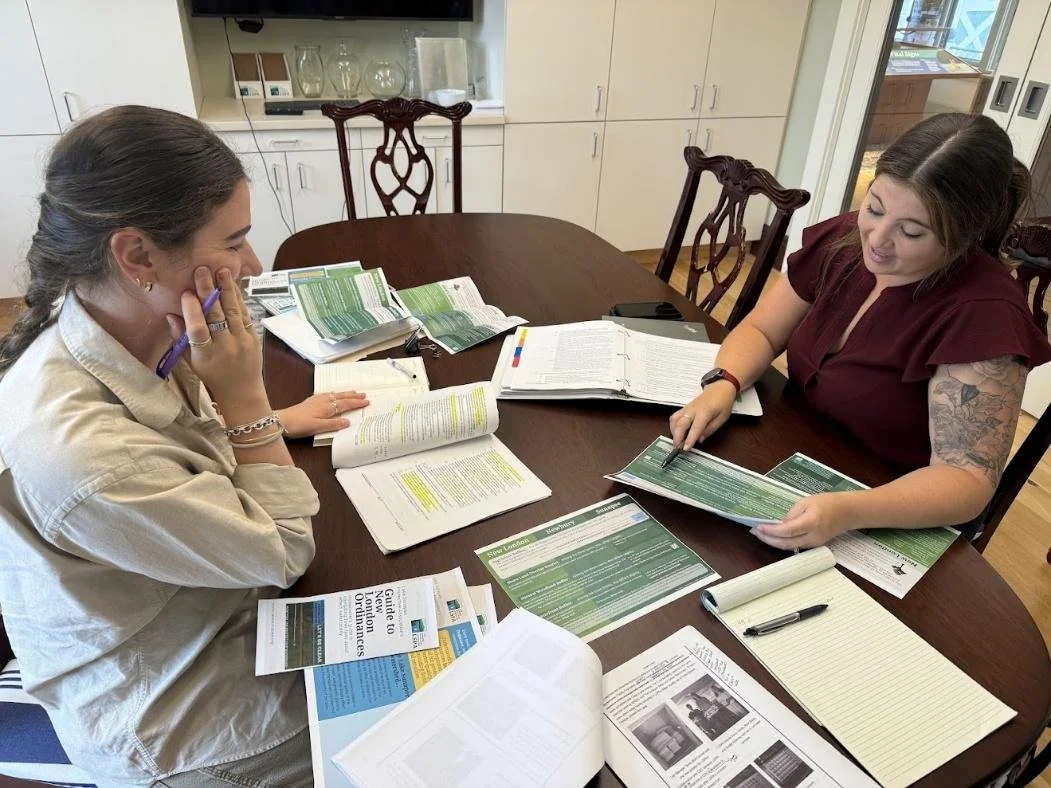
With funding from the Burkehaven Family Foundation, LSPA launched the Burkehaven Fellowship in 2025 and welcomed two inaugural fellows. Julia Danielsen focused on research examining the economic value of the watershed—particularly its importance to local town tax bases. Alyssa Spencer supported septic ordinances, septic risk mapping, and water quality data analysis. Together, they collaborated on clear, accessible outreach materials to help residents understand town ordinances, strengthening collaboration between communities and municipalities for the benefit of the watershed.
Septic Ordinances Now Cover the Entire Watershed
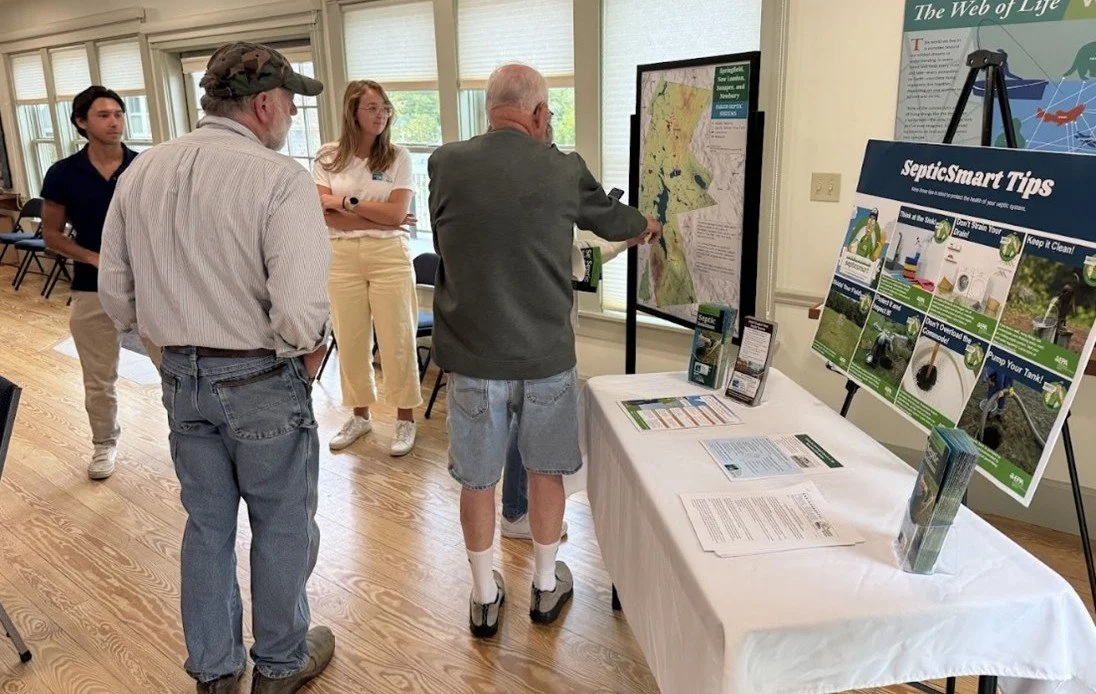
In February 2025, the Town of Newbury adopted a septic ordinance, and New London’s ordinance takes effect on January 1, 2026. With these milestones, all Lake Sunapee Watershed towns—Sunapee, Springfield, Newbury, and New London—now have septic regulations in place. This achievement reflects years of collaboration among selectboards, health officers, and engaged residents, and represents one of the most meaningful preventive steps we can take to protect water quality and public health.
Click here to learn more about septic ordinances.
Workshops That Translate Education into Impact
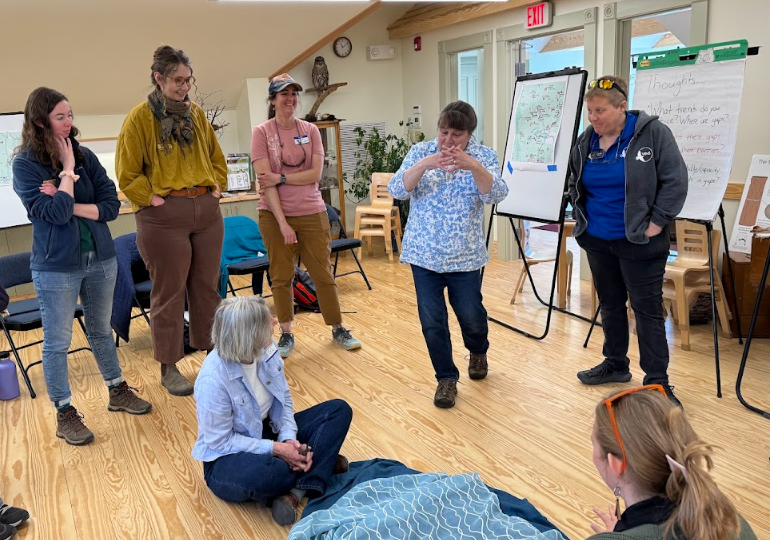
LSPA significantly expanded the number and scope of workshops offered at the Center for Lake Studies in 2025. Sessions were designed for zoning and planning board members, realtors, septic designers and installers, property managers, road agents, and homeowners: groups whose decisions directly impact water quality. These workshops connect stakeholders with current science, evolving policies, and practical tools, turning learning into informed, on-the-ground action.
Click here to attend a workshop.
Collaborative Progress on the Mount Sunapee Wastewater Treatment System
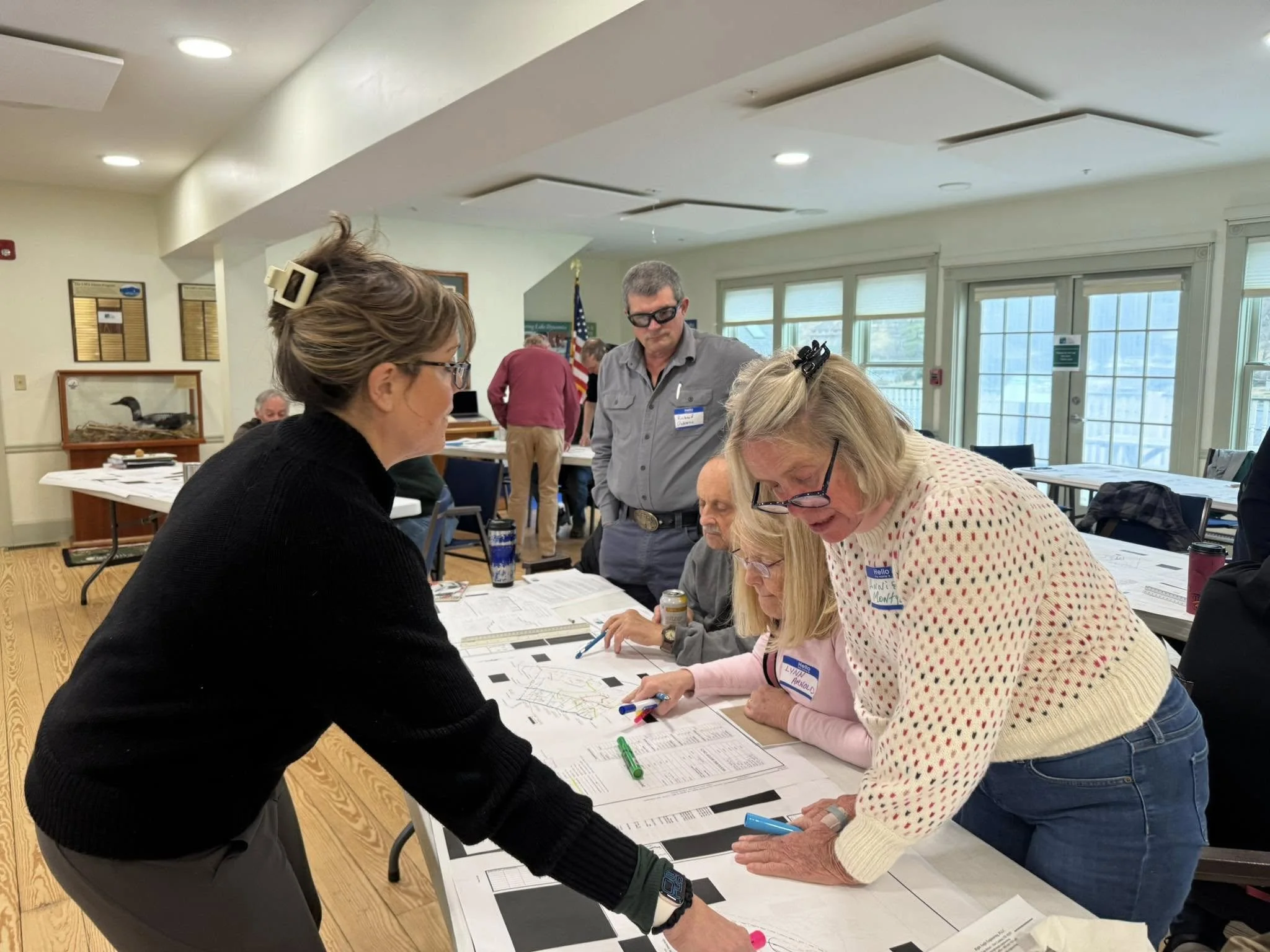
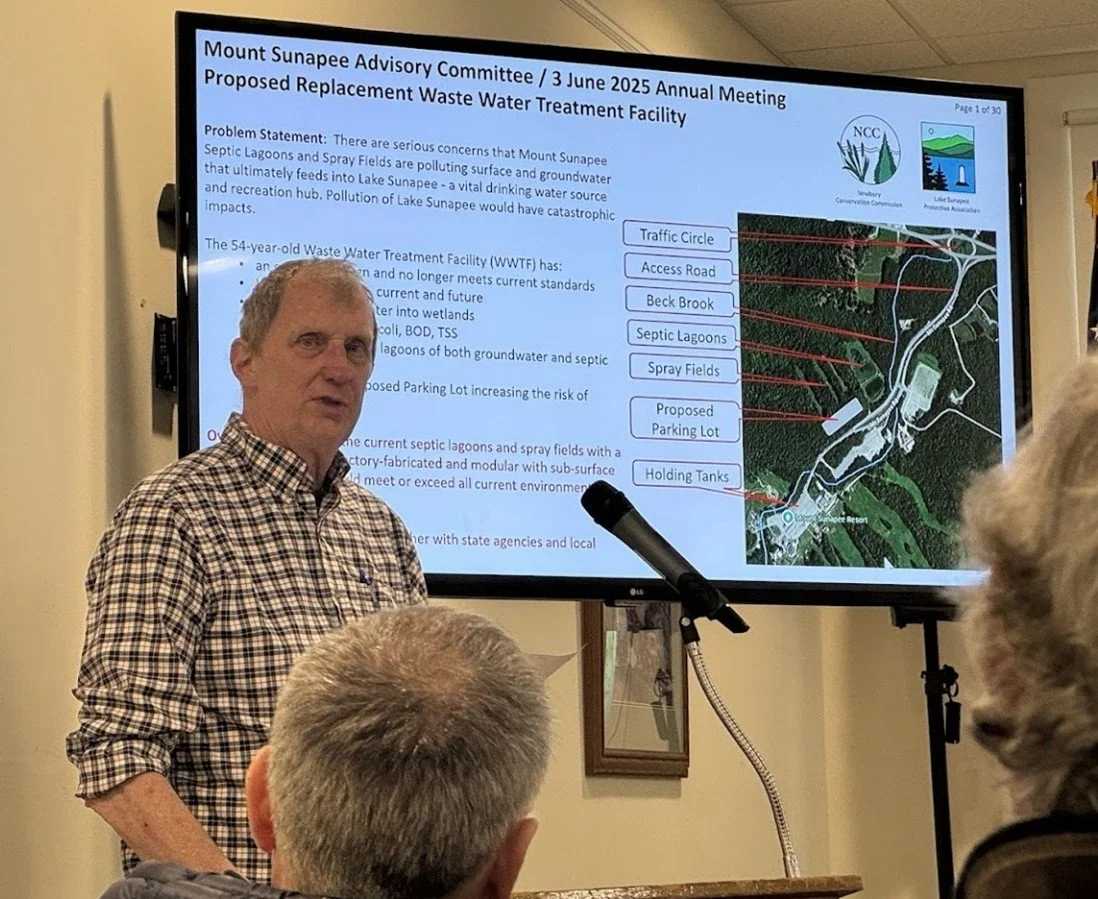
Community voices and collaborative leadership helped move progress forward on addressing the aging wastewater treatment lagoon at Mount Sunapee Resort. LSPA worked with the Newbury Conservation Commission, NHDES, NH Department of Natural and Cultural Resources, Mount Sunapee Resort, and regional environmental organizations, and also hosted stakeholder roundtables to support informed dialogue. As a result, $100,000 in Clean Water State Revolving Fund support was made available for a feasibility study, an important step in the process of addressing the outdated systems. Thank you to everyone who participated.
Click here to learn more about this collaboration.
Another Year Without Cyanobacteria Blooms on Lake Sunapee
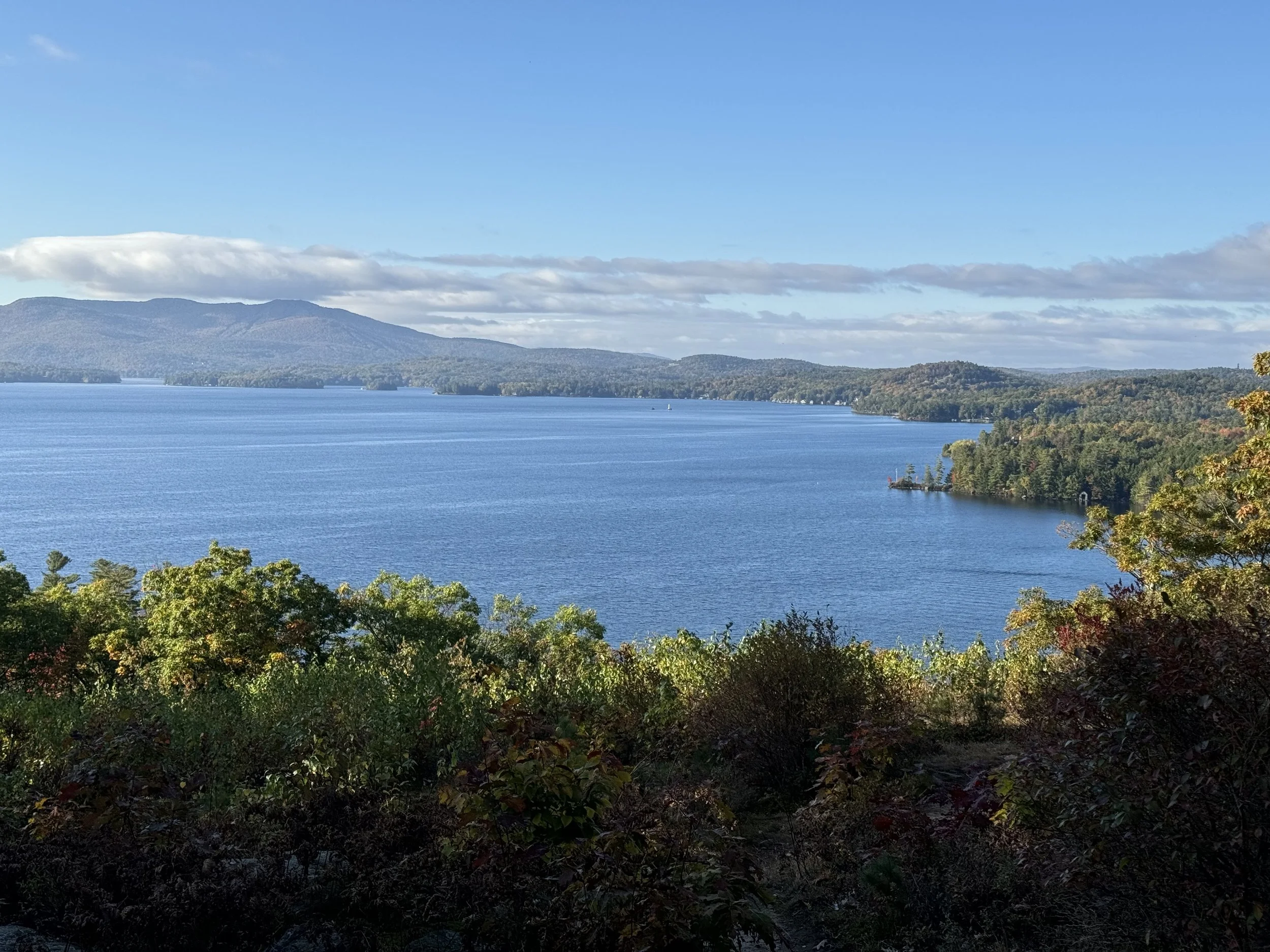
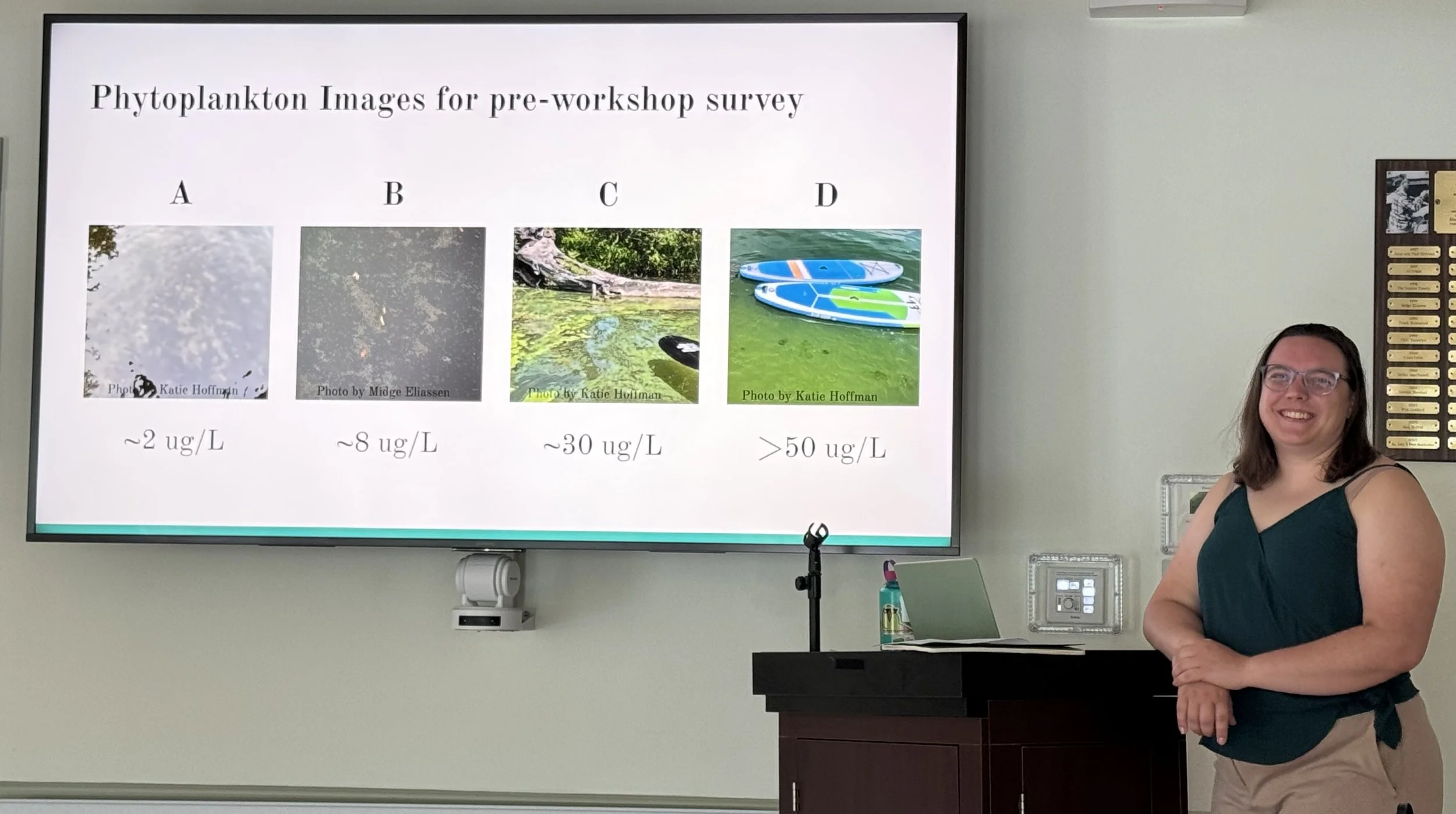
Despite increasing cyanobacteria blooms across New Hampshire, Lake Sunapee remained visibly clear and safe for recreation every day of 2025. While no single year tells the whole story, this outcome reinforces the importance of proactive work, including reducing erosion, restoring shorelines, and managing runoff throughout the watershed. These efforts, many years in the making, help lower the risk of future blooms and support long-term lake health.
Click here to learn about our work to lower the risk of future cyanobacteria blooms.

Preventing and Responding to Aquatic Invasive Species
Preventing invasive species takes persistence, people, and partnerships. In 2025, fourteen paid Lake Hosts spent more than 2,300 hours at Lake Sunapee boat ramps and conducted nearly 5,400 inspections. Over 50 LSPA Invasive Watch volunteers surveyed roughly 32 miles of shoreline by swimming, paddling, and snorkeling. When curly-leaf pondweed reappeared in a small area of George’s Mills, we were able to act quickly—bringing divers back to remove it before it spread in Lake Sunapee. We also partnered with other lake associations in the watershed, and with NHDES, to remove curly-leaf pondweed from Baptist Pond and Otter Pond. Support from LSPA members, watershed towns, NH LAKES, volunteers, and partner lake associations, made this multi-pronged defense possible.
Click here to learn more about LSPA’s Invasive Species programs.
Research Partnerships Advancing Lake Science
Data from our newly upgraded water-quality buoy, along with expanded monitoring, supported advanced lake modeling efforts by Virginia Tech Calhoun Fellows in 2025. These researchers are using Lake Sunapee data to develop a better understanding of algal dynamics and other complex lake processes. Through partnerships with research institutions including Virginia Tech, the Cary Institute of Ecosystem Studies and the global GLEON network, LSPA contributed local data to broader scientific efforts, ensuring that the best available science informs our watershed management actions and that Lake Sunapee helps advance understanding beyond our watershed.
Click here to learn more about LSPA’s science.
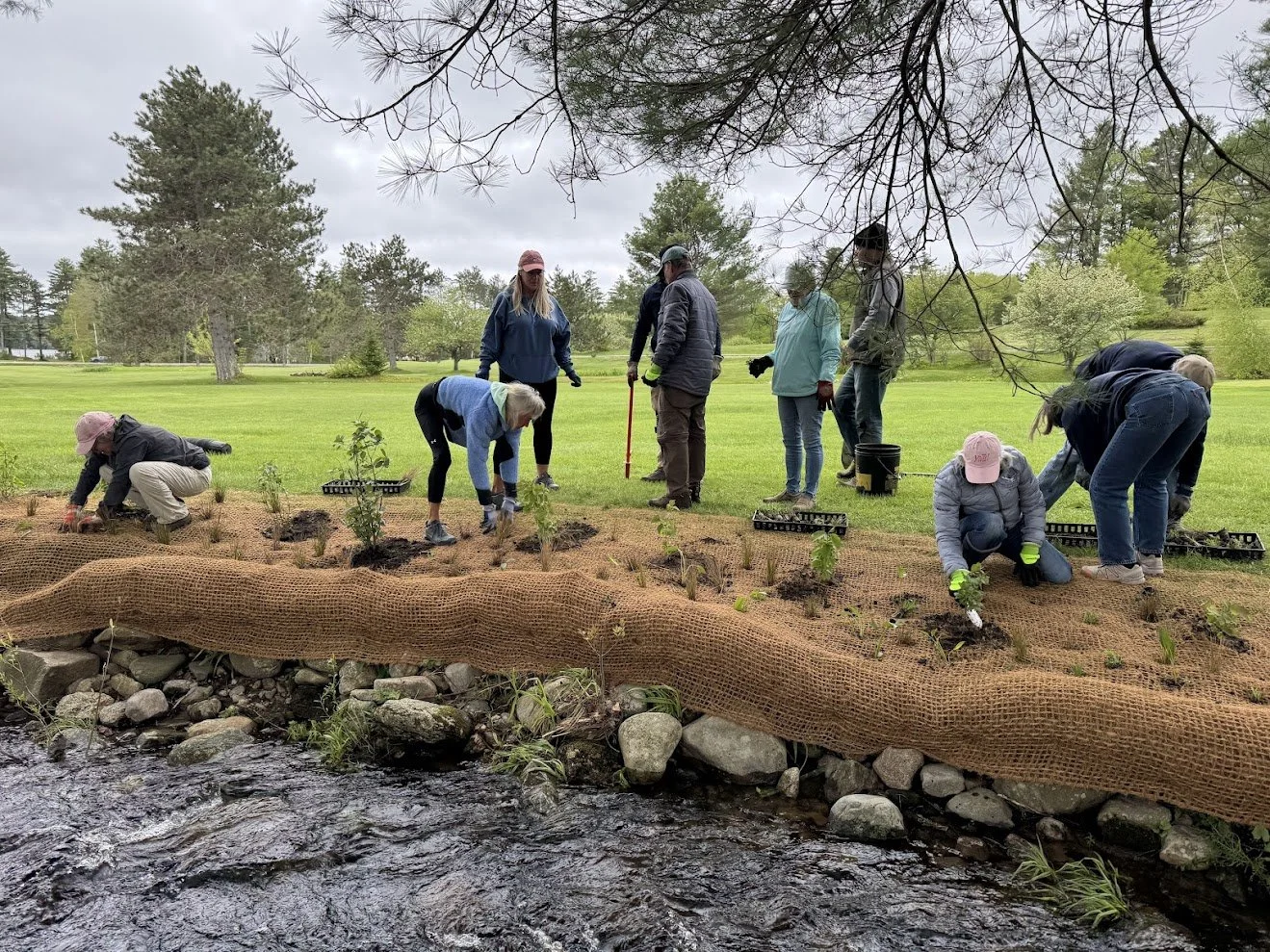
Restoring Land to Protect Water
In 2025, we advanced watershed projects in priority areas, including erosion reduction projects on Kidder Brook, in collaboration with Twin Lake Village, and shoreline buffer restoration efforts on Little Lake Sunapee in partnership with the Wallula Community Homeowner Association and the Little Lake Sunapee Protective Association. Volunteers planted nearly 1,400 native plants to contribute to these efforts. NH LAKES and NHDES provided a portion of the funding. These projects stabilize soils, slow stormwater runoff, and reduce the nutrient and sediment inputs that can lead to cyanobacteria blooms.
Click here to learn more about LSPA’s Watershed Management Plan.
Education Rooted in Experience
In 2025, LSPA reached more than 5,200 people through hands-on school programs, family programs, public lectures, and community events. This outreach included school programs in the Kearsarge, Newport, and Sunapee districts, Nature Exploration Story Time (NEST) for young children, and the annual Love Your Lake open house at our Center for Lake Studies. LSPA’s public awareness campaign, “Let’s Be Clear,” continued to reach new groups of stakeholders, raising awareness of simple actions homeowners can take to protect water quality. Connecting students, families, and adults directly with watershed science, local ecology, and practical stewardship actions, turned education into impact in 2025.
Click here to learn more about LSPA’s education programs.