
Lake Sunapee's Lake Host Program
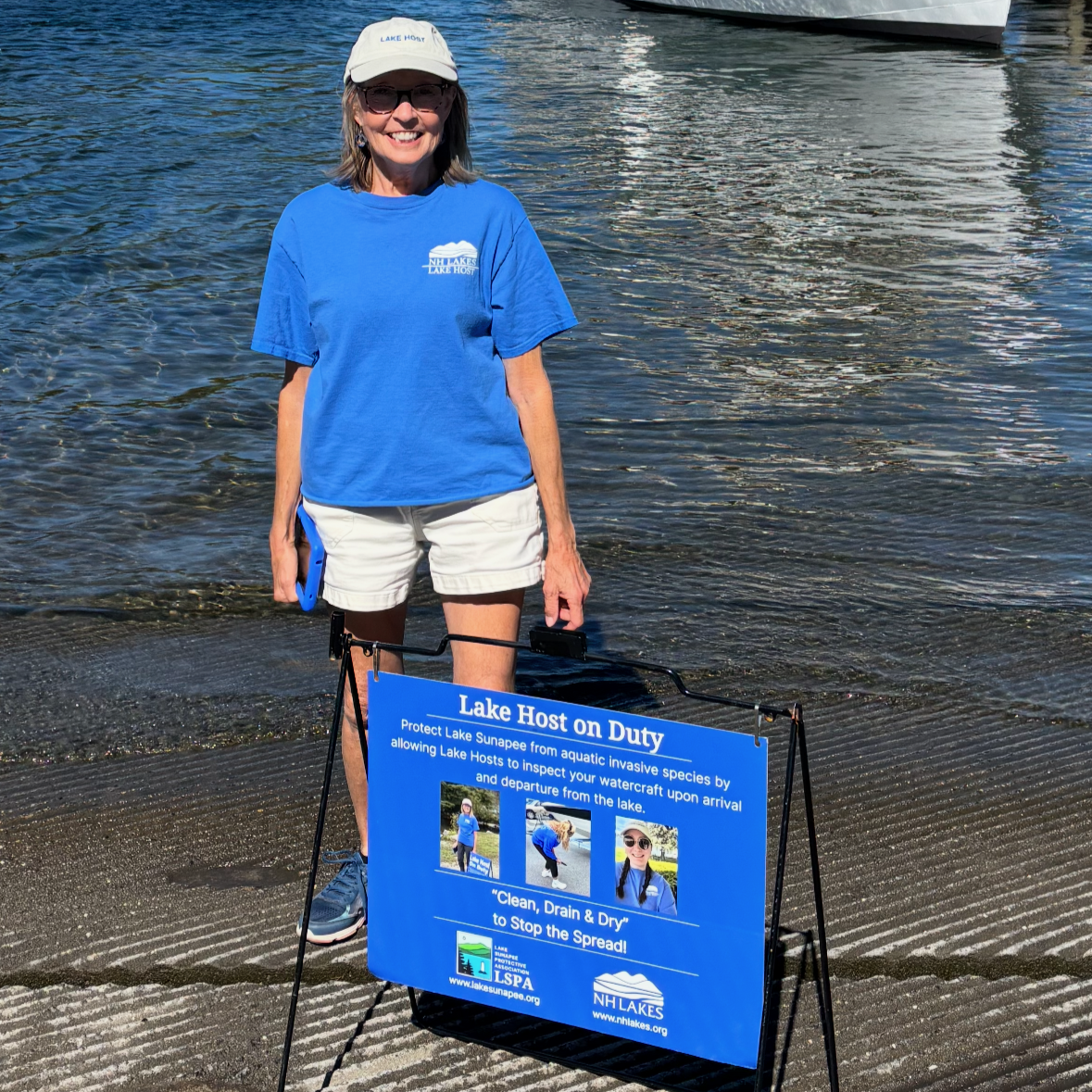
The Lake Host program, managed in collaboration with NH LAKES, is a complimentary boat inspection program to look for and remove any aquatic invasive species (AIS). Lake Hosts educate boaters about how to prevent the spread of invasive species and why it's important to Clean, Drain, & Dry watercraft and gear between waterbodies.
The Lake Sunapee Lake Host program covers all five ramps on the lake and usually consists of ten or more hosts who are on duty from May through September.
In 2026, 13 paid Lake Hosts and three volunteer Lake Hosts conducted over 5,200 inspections. See below for a breakdown by ramp. There was one save on Lake Sunapee in 2026 — click here to read about it. Additionally, NH LAKES recorded 27 other saves around the state.
If you would like to become a Lake Host, please contact Susie Burbidge at susieb@lakesunapee.org or fill out this form with NH LAKES.
Click here for a list of boat friendly car washes courtesy of the NH LAKES.
Click here for an interactive map of parking in the Town of Sunapee
2026 Season Summary
Our Lake Hosts conducted over 5,200 courtesy boat inspections in 2026. The pie chart below displays the number of inspections by ramp (keep in mind that some watercraft may have been inspected twice in a given day, once upon arrival and again when departing the lake).

*The boat ramp in Sunapee Harbor, Georges Mills and at the State Park Beach are staffed 7 days a week, whereas Blodgett Landing and Burkehaven ramps are only staffed during weekends and holidays.

History of the Lake Host Program on Lake Sunapee
The Lake Host program at Lake Sunapee was originally established in 2000 and hosts were called Launch Site Monitors. Currently, this program is administered by NH LAKES, a non-profit organization devoted to protecting NH waterbodies and we work in partnership with them to bring the program to Lake Sunapee. In 2001, variable milfoil, an invasive aquatic plant, was first discovered in Georges Mills, and later in Sunapee Harbor. In both cases, LSPA, with the assistance of NHDES, successfully eradicated the plant.