Recent Water Quality Improvement Projects
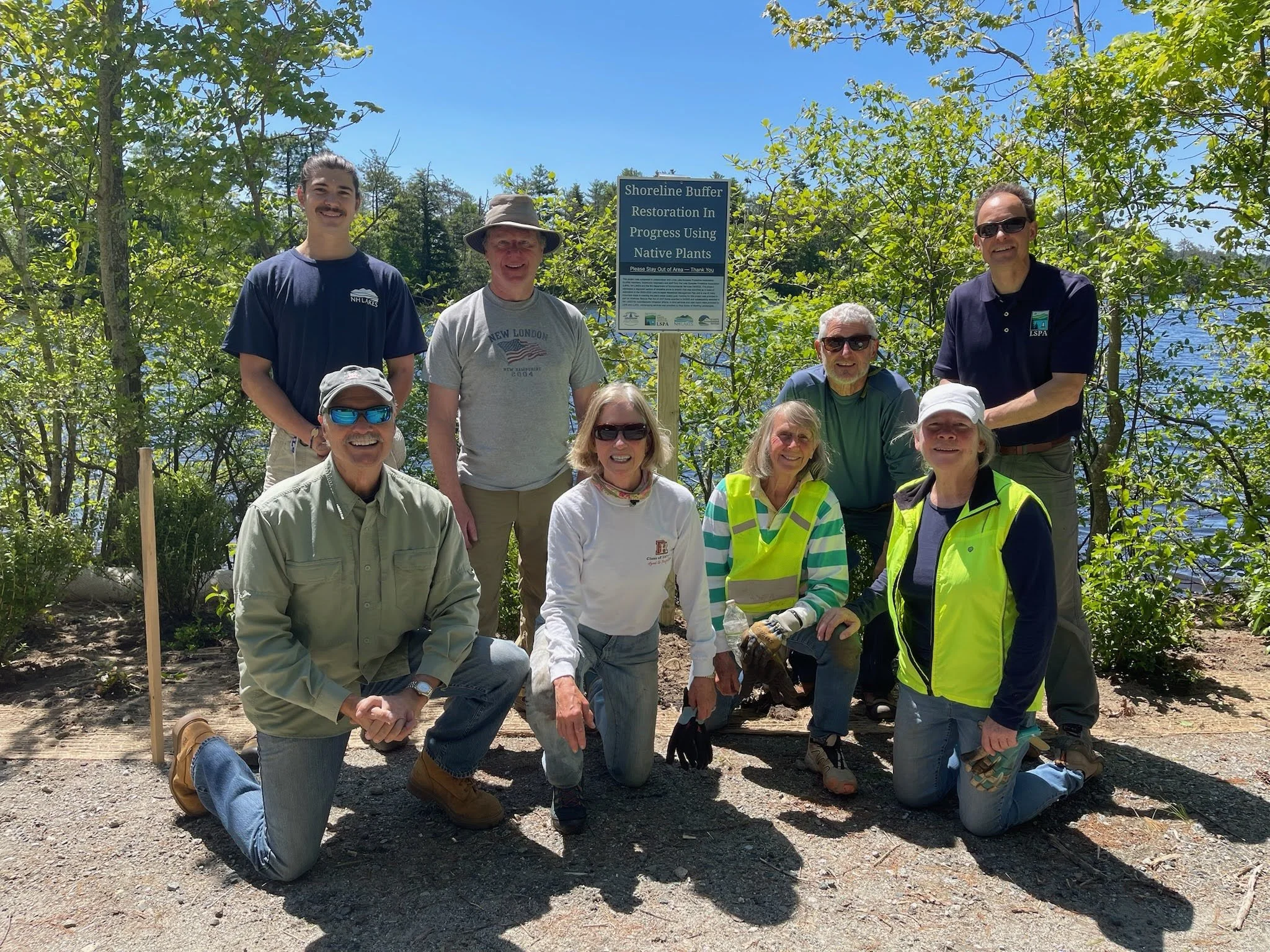
Water quality improvement projects are designed to slow down and infiltrate stormwater runoff. Stormwater runoff often causes erosion and can transport pollutants and sediments laden with excessive nutrients into lakes and ponds. The following projects involve a collaboration between governmental agencies, local towns and private landowners. They are completed using a combination of in-kind match, private contributions and grant funding.
Otter Pond Beach Shoreline Buffer Enhancement
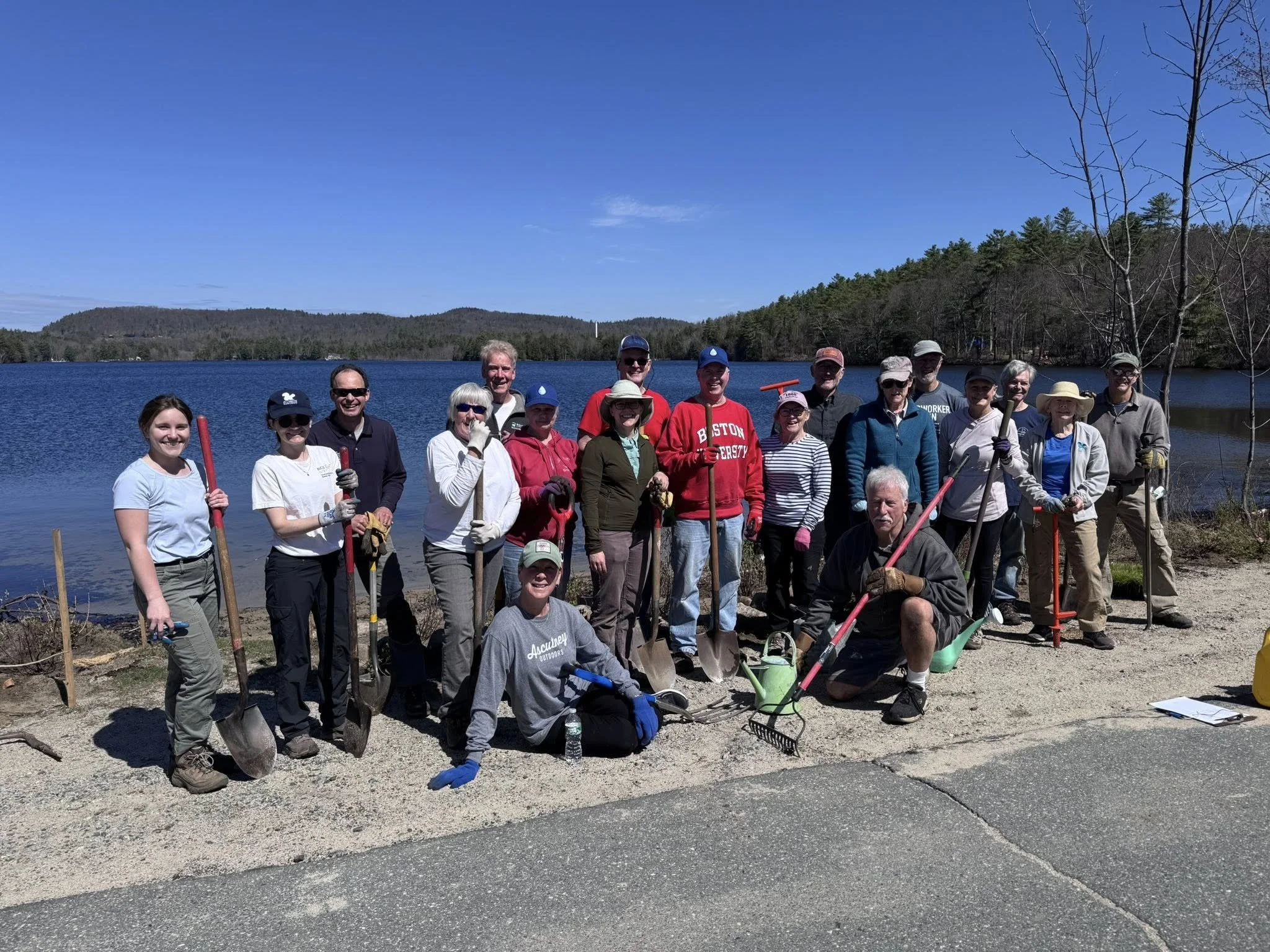
The Otter Pond Beach Shoreline Buffer Enhancement project was a collaborative effort between LSPA, Otter Pond Protective Association (OPPA) and Ausbon Sargent Land Preservation Trust (ASLPT). Over time, the number and width of beach access paths cut through the shoreline buffer have increased, leading to erosion of the shoreline. In late April 2026, volunteers came together to plant over 200 native plants and shrubs to better define parking and beach access areas which will help stabilize soils and slow down stormwater runoff at that site.
Funding for this project was provided by OPPA and monies from the LSPA Watershed Challenge Fund. In the fall, infiltration steps, another type of stormwater control measure, will be installed at this site as part of the second phase of this project.
Click here to see a more detailed plan on this project.
Kidder Brook Bank Stabilization
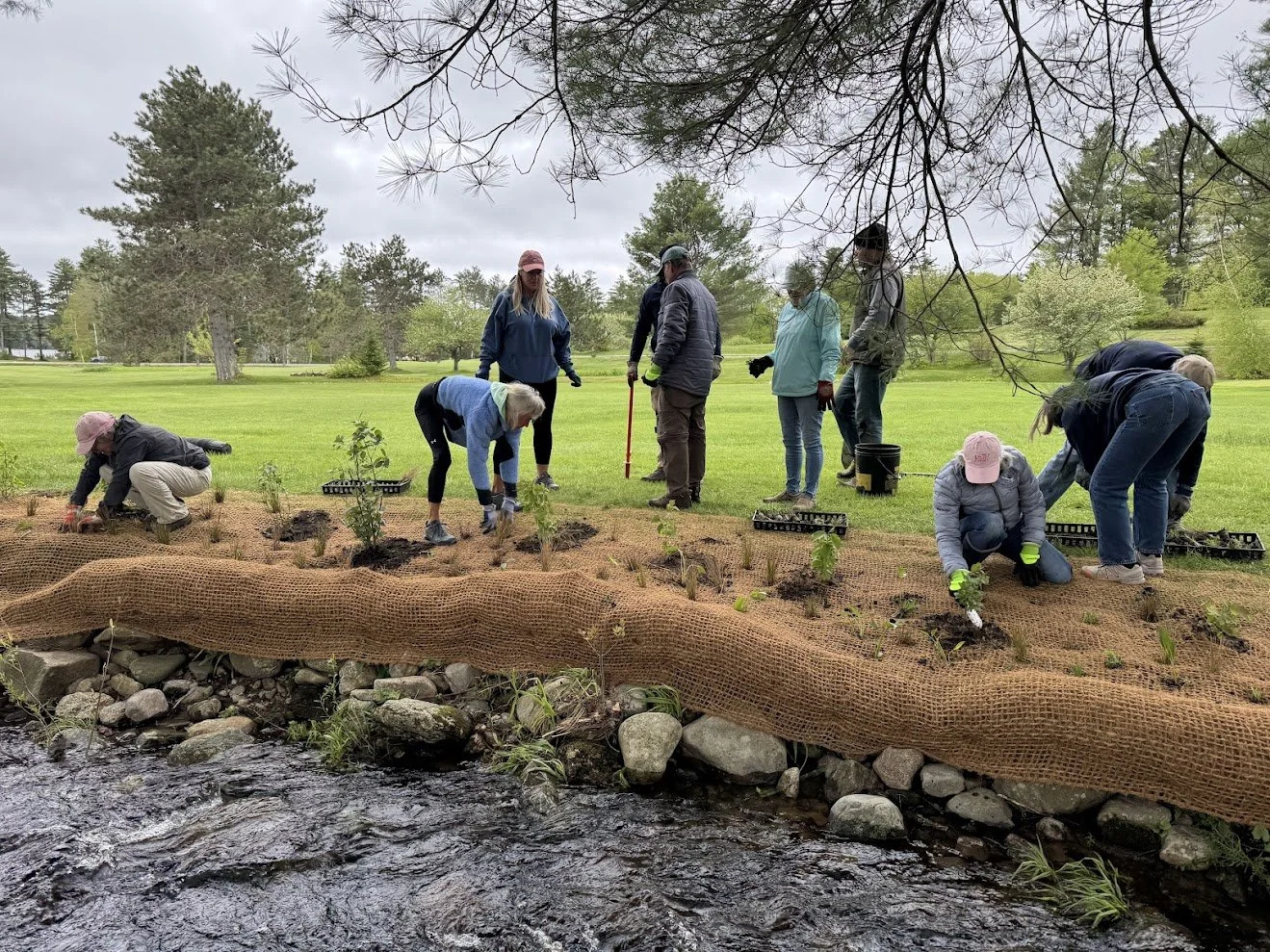
The Kidder Brook bank stabilization project, a collaborative effort between Fuss & O’Neill, Twin Lake Village (TLV), and LSPA, was completed in October 2025. The project combined floodplain restoration, streambank stabilization with stone toe protection, and the planting of a robust riparian buffer to improve water quality downstream. Nearly 1,400 native plants were installed by volunteers, TLV staff, and community partners to stabilize the banks and reduce erosion.
Funding was provided by a NHDES Watershed Assistance Grant, along with cash and in-kind contributions from TLV and LSPA donors who contributed to the Watershed Challenge Fund.
Wallula Community Homeowner Association (WCHA) Shoreline Buffer Restoration
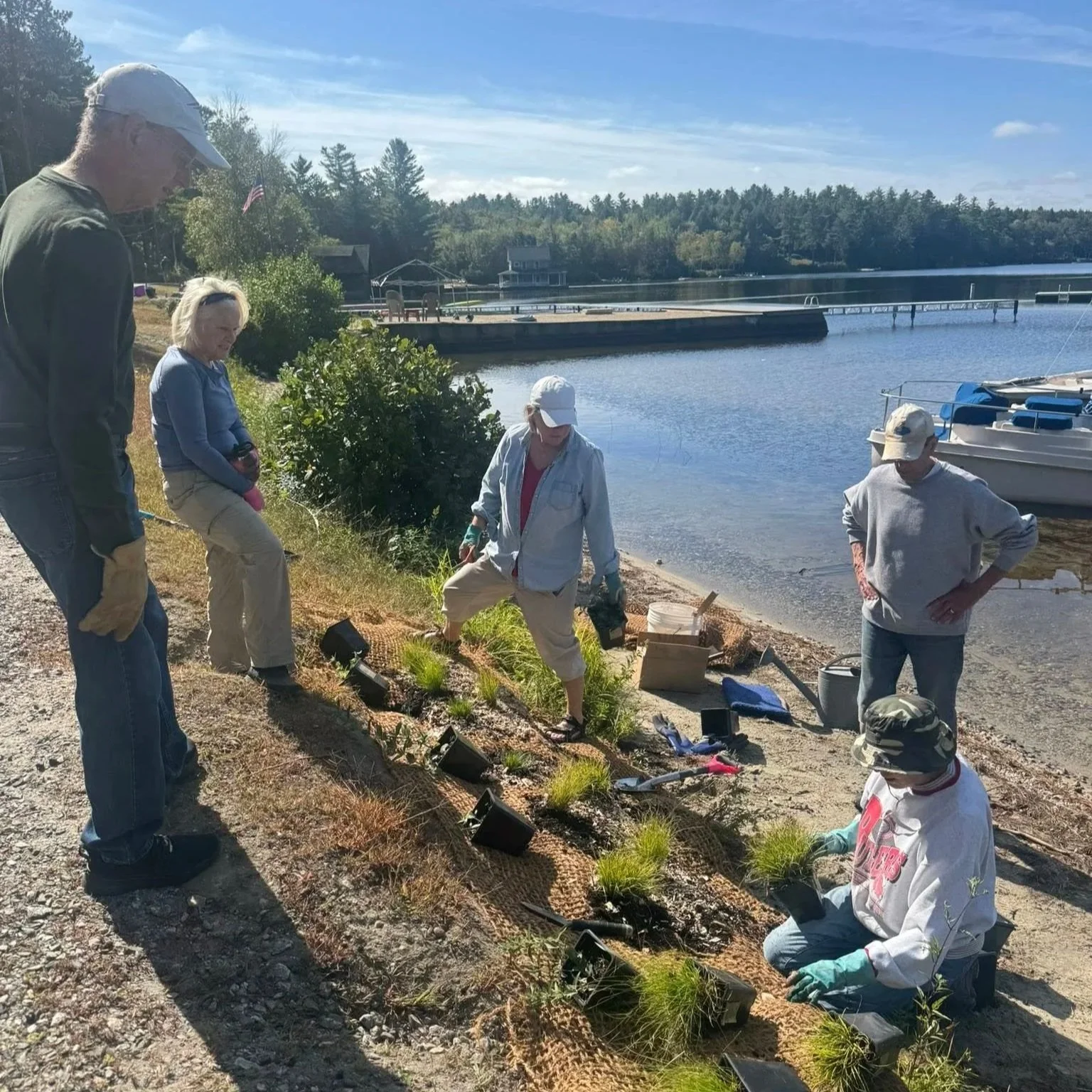
LSPA and Wallula Community Homeowner Association (WCHA) volunteers came together in the spring and fall to plant native vegetation to re-establish a shoreline buffer along a section of their shared property on Little Lake Sunapee in New London. Resilient groundcovers and woody plants, purchased by both organizations, were used to create the buffer to stabilize the soil and slow stormwater runoff. These efforts reduce the amount of nutrients and other pollutants entering Little Lake Sunapee, improving water quality and reducing the risk of cyanobacteria blooms. WCHA plans to continue with this effort in 2026.
Little Lake Sunapee Shoreland Buffer Restoration
On June 3rd, volunteers from the Little Lake Sunapee Protective Association (LLSPA) gathered to plant native vegetation along the shoreline of Little Lake Sunapee in Springfield. The vegetated buffer includes resilient groundcover and woody plants that will target erosion. These native plants also help slow stormwater runoff and boost natural filtration, key actions that support long-term water quality.
This project was made possible through our partnerships with LLSPA, the Cleveland and Woeltz families, NH LAKES, and the New Hampshire Department of Environmental Services (NHDES) and was funded through an American Rescue Plan Act (ARPA) grant, along with cash and in-kind contributions from LSPA and LLSPA.